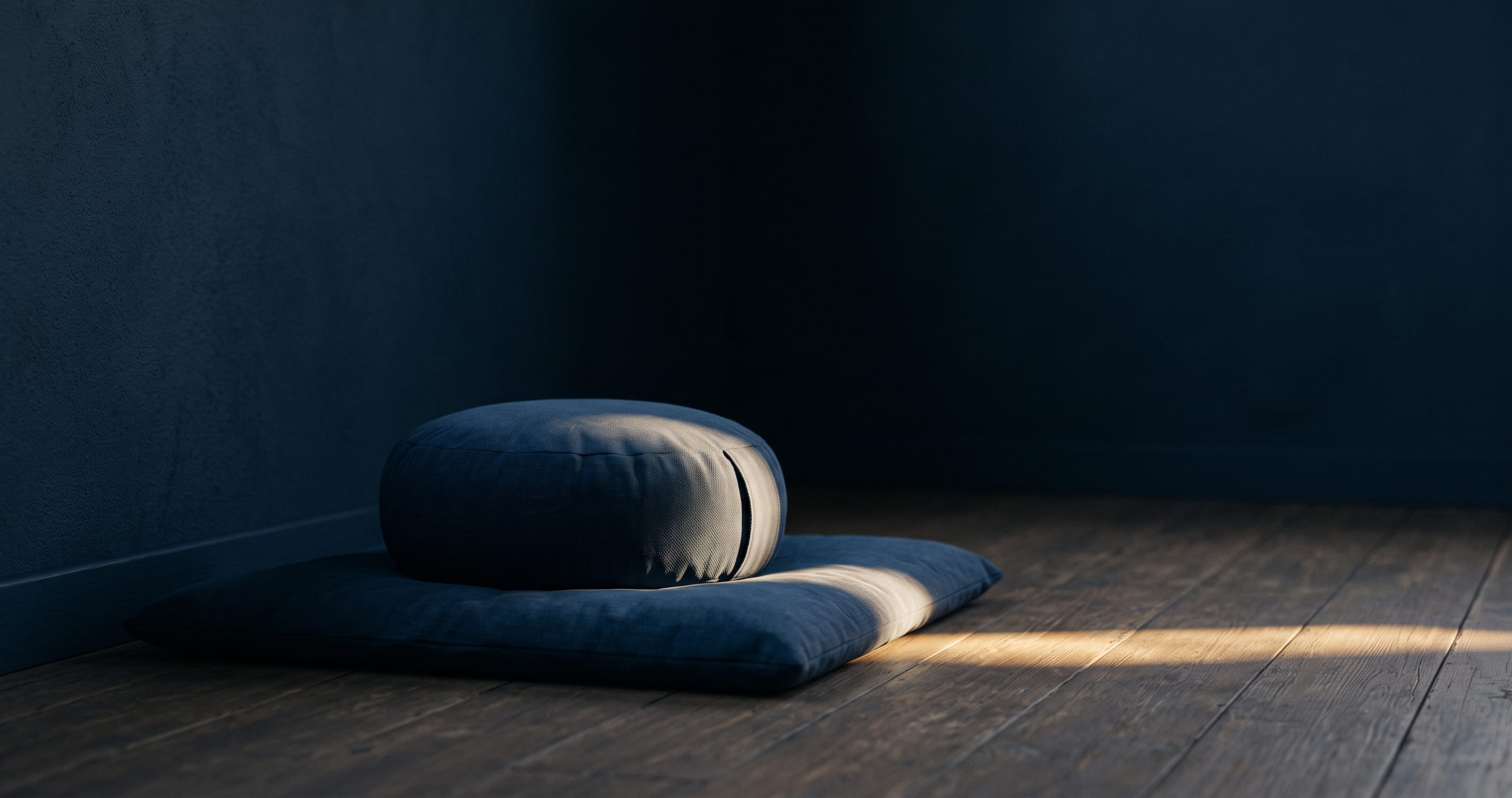
Meditation is the main practice behind everything else I do. It is how I guard my mind against negative thoughts and get to the end of a day feeling clear instead of cluttered.
Most people who try it quit for the same three reasons. They cannot concentrate, they get distracted, and they get bored.
Those are not reasons to stop. They are the reasons to start.
TL;DR
If you cannot concentrate when you meditate, you have found the thing meditation trains. Sit in a chair or on a cushion, hands face up on your lap, eyes closed. Breathe normally and count every breath, in breath one, out breath two, all the way to ten, then start again. You will lose count. When you do, smile and go back to one. That is not the practice failing, that is the whole practice. Keep it simple, keep it short and do it every single day. Daily and easy beats long and occasional, every time.
In this article
- Why most people give up on meditation
- Why being bad at it is the point
- What I actually use meditation for
- The 10-breath method, step by step
- What to do when you lose count
- What if you fall asleep
- Why short and daily beats long and occasional
- What changes when you do this every day
- Common questions about meditating when you cannot concentrate
Why Most People Give Up on Meditation
Almost everyone quits in the first fortnight, and they nearly always give the same reason.
They sat down, their mind would not stop, and they decided they were no good at it.
Some sit there planning tomorrow. Some replay a conversation from six years ago. Some just get bored and open their eyes after four minutes to check how long is left.
Then comes the conclusion that ends it. My brain is too busy for this. Meditation is not for people like me.
I understand it, because that was exactly my first month. What nobody had told me was that all of that is meant to happen.
Why Being Bad at It Is the Point
Here is the reframe that changes everything.
You are not meant to sit down with an empty mind. You are meant to sit down with a busy one and practise coming back.
Think about it like the gym. The weight being heavy is not the problem with the exercise, the weight being heavy is the exercise. Nobody says they are too weak to lift, so they will wait until they get stronger.
Same thing here. If your mind wanders forty times in ten minutes, you have just done forty repetitions of noticing and returning. Someone with a naturally calm mind did four.
You got the better session.
So take those three complaints and turn them over. Cannot concentrate means you are training concentration. Get distracted means you get more chances to practise. Get bored means you are learning to sit with yourself without needing entertainment, which is a rarer skill now than it has ever been.
The more you do it, the more concentration you build. The calmer you get. And, strange as it sounds at the start, the more you actually enjoy it.
What I Actually Use Meditation For
I am not doing this to reach a special state or have some kind of experience.
I use it for two things.
The first is guarding my mind. Negative thoughts turn up all day and the ones you believe become real to you. Sitting still every morning is how I get practice at watching a thought without swallowing it, which is the whole idea behind why you are already enough.
The second is emptying. By the end, no planning, no memories, no running commentary. Just clear.
That clear feeling is worth more than it sounds. It is the difference between starting a day with a full inbox in your head and starting it with a blank page.
I should be honest about one thing. Early on, meditation made me feel worse before it made me feel better, because it took away the noise I had been hiding behind. I wrote about that stretch in losing your sense of self. It passes, and what is on the other side is worth the discomfort.
Want more of this in your inbox?
Free weekly tips on confidence, self-belief and daily practice. No sales pitch, ever.
Get the Free Email SeriesThe 10-Breath Method, Step by Step
This is the whole thing. It takes longer to read than to learn.
1. Sit
Use a chair or a cushion on the floor. Either is fine, and the chair is not the lesser option.
Sit upright without being rigid. Shoulders down, chin slightly tucked, belly soft so the breath can move.
2. Hands and Eyes
Rest your hands on your lap, palms facing up. Close your eyes.
Palms up is a small thing that does something real. It is an open posture rather than a braced one, and you can feel the difference within a minute.
3. Breathe Normally
Do not manage the breath. No deep breathing, no holding, no counting seconds.
Let it be exactly as it already is. Your only job is the counting.
4. Count Every Breath to Ten
In breath, one. Out breath, two. In breath, three. Out breath, four.
Keep going to ten, then start again at one.
This is a version of an old Zen practice called susokukan, which means watching the breath with numbers. The traditional version counts only the out breaths. I count both, because it gives a busy mind half as much room to wander between numbers.
If you are very distracted, count to five and restart instead of ten. Shorter loops are easier to hold.
5. Start With Ten Minutes
Ten minutes is plenty at the beginning. Five is fine too.
Build up when it feels easy rather than on a schedule. Twenty minutes is where I sit now, and it took a while to get comfortable there.
Follow Along With a Guided Version
If you would rather be talked through it the first few times, this short guided session counts both the in breath and the out breath, the same way I do it.
What to Do When You Lose Count
You will lose count. Not might. Will.
You will be at four, and then you will be somewhere else entirely, and you will have no idea whether you got to seven or thirteen.
When that happens, do this. Smile, then go back to one.
The smile is not decoration. It stops the moment turning into self-criticism, and self-criticism is the thing that actually ends people's practice.
Watch what your head does when you notice you have drifted. There is usually a small jab in there. Typical. Cannot even count to ten. That jab is exactly the kind of thought this practice teaches you to stop believing.
So catching yourself at thirteen is not a failure. It is the rep. It is the moment the training actually happens.
Some days you will get to ten cleanly a dozen times. Other days you will not get past three once. Both days count the same.
What If You Fall Asleep
Then you fall asleep, and that is okay.
It usually means one of two things. You are tired and your body took what it needed, or you have relaxed properly for the first time in a long while.
Neither is a problem. Do not add it to the list of things you are getting wrong.
If it happens every time and you would rather it did not, sit up straighter, move to a chair, or do it earlier in the day rather than last thing at night.
But do not let it become the reason you stop. I would rather you slept through ten minutes every day than gave up because you kept nodding off.
Why Short and Daily Beats Long and Occasional
Meditation works when it is done every day. So the practice has to be simple enough that you will actually do it every day.
That is why the method above has no app, no music, no special posture and nothing to buy. The more moving parts you add, the more reasons you give yourself to skip it.
The research backs this up. Studies on app-based meditation have found that short daily sessions do more than long sessions done now and then. Most people notice a real difference within about four to eight weeks of daily practice.
Four to eight weeks is not long. It is also longer than most people give it, which is the whole reason so few stick with it.
Twenty minutes a day is the container I use for this and for everything else I do on myself. I have written about why that number works in the 20-minute rule for self-belief, and about what to do on the days it feels impossible in when your 20 minutes feels like too much.
If you want to see where this sits in an actual day, my full routine is in the morning routine that changed my life.
What Changes When You Do This Every Day
The first change is speed. You get calm faster. What took fifteen minutes in week one takes three by week six.
The second is what happens off the cushion. You start noticing thoughts during the day instead of just being carried by them. That is the guarding, and it comes directly from the counting.
The third is the empty feeling, and it is the one worth waiting for. No negative thoughts. No planning. No memories. Just quiet.
Sitting in that, even briefly, tends to answer a question people spend years chasing. When there is nothing in your head telling you what you are short of, you notice you are not short of anything.
That is the bit that makes people happy, and it is not something I can argue you into. You have to sit down and find it.
Do this every day and your life will change. I am not hedging on that, because I have watched it happen in mine and I know what it replaced.
If you would rather come at it through feelings than through breath, the letting go practice in how I let go of negative thoughts and feelings every day is the other half of what I do, and the two work well together.
Tried it? Let me know how you get on.
Building a daily practice around what you actually need is what I work through in self-belief coaching. No sales script, just a real reply from me.
Contact MeCommon Questions About Meditating When You Cannot Concentrate
Am I doing it wrong if my mind will not stop?
No. A busy mind is the starting condition for almost everyone, and it is the thing the practice works on. Noticing that you drifted is the skill, so every time it happens you are getting a repetition rather than failing one.
How long should a beginner meditate for?
Five to ten minutes a day is plenty to start. Consistency matters far more than length, and a short session done daily will beat a long one done occasionally. Build up when it starts feeling easy rather than forcing a longer sit too early.
Should I count the in breath and the out breath, or just one?
Traditional Zen breath counting uses the out breath only. I count both, so an in breath is one and an out breath is two, because it leaves a busy mind less space to wander between numbers. Pick one way and stay with it rather than switching about.
Is it bad if I fall asleep while meditating?
Not at all. It usually means you were tired or that you relaxed properly. If you would rather stay awake, sit upright in a chair and practise earlier in the day instead of late at night.
How long before I notice any benefit?
Most people notice a difference within four to eight weeks of daily practice, with small improvements in focus showing up sooner than that. The first thing you tend to notice is how much quicker you settle, not how long you can hold the count.
What if meditation makes me feel worse?
That is common early on, because sitting still removes the distractions you were using to avoid whatever is underneath. It usually settles as the practice becomes familiar. If difficult feelings are intense or persistent, shorten the sessions and speak to your GP or a qualified therapist rather than pushing through on your own. I cover where that line sits in why meditation can make you feel worse, and when to stop.
Written by Harry
Not a trained life coach or counsellor, just sharing what has helped me on my own journey. For more free guides on confidence, self-belief and letting go, visit the blog. To read the full story, see the about page.