TL;DR
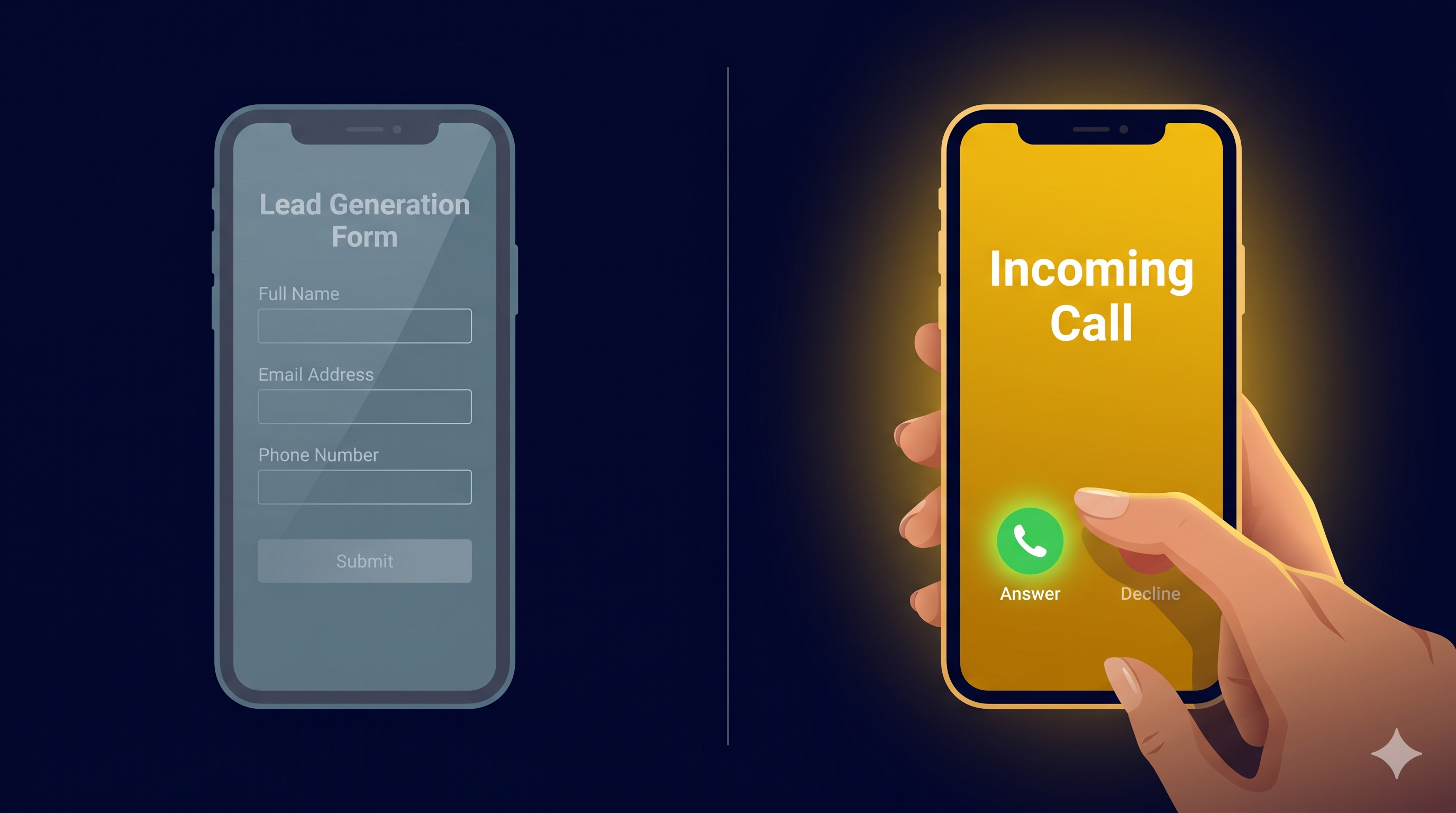
If your Facebook ads for your local business are not working, the format is usually the issue. Meta lead form ads look cheap on the dashboard but produce ghost leads that nobody answers when you call back. Call ads are different. Someone taps the ad, your phone rings directly, no form, no follow up chase, just a real conversation with someone who was ready to book. A dentist tested this with £28 and booked a real patient on day one. This post covers why it works, which UK trades benefit most, and how to run your first one.
Lead generation for local businesses has a persistent and expensive problem. The format most agencies default to is optimised for a metric that has nothing to do with real business performance. This post looks at what that costs you, what works better, and what to do about it.
What you will get from this
- Why Meta lead form ads produce ghost leads and what happens after someone fills in your form
- How call ads work differently and why the phone rings with someone who actually wants to book
- The £28 dentist test that produced a booked appointment on day one and what the numbers really mean
- Which UK trades get the best results from call ads and why
- How to write your first Meta call ad and set it up in Ads Manager without an agency
In this article
- Why your Meta ads are producing leads that never become customers
- What actually happens after someone fills in your form
- What a call ad does differently
- The £28 test that booked a real appointment
- Which trades get the best results from call ads
- Why agencies keep running the wrong format
- How to set up your first Meta call ad
- Common questions about Meta call ads
Why Your Meta Ads Are Producing Leads That Never Become Customers
Facebook ads for your local business are not working the way you expected. Leads come in. Your phone does not ring with real customers. You call back and get voicemail. You try again and get nothing.
This is not a targeting problem. It is not a budget problem. The problem is the format.
Meta lead form ads were built for volume. Someone sees your ad while scrolling Instagram. A form appears with their name and number already in it. They tap submit in under ten seconds, without stopping what they were doing, without deciding to buy, sometimes without reading what they just signed up for.
That is the lead you are now chasing. That is the number your receptionist calls three times without an answer. That is the voicemail nobody returns.
Meta lead form ads not converting into real bookings is not a bug. It is exactly what they were designed to do. They generate volume at a low cost per lead. That metric looks great in a report. It does not pay your wages.
What Actually Happens After Someone Fills In Your Form
Picture the exact sequence. Someone fills in your form at half ten on a Tuesday night. They are on the sofa, half watching telly, and your ad appeared while they were scrolling.
You see the lead the next morning. You call at nine. No answer. You try again at eleven. Voicemail. One more attempt after lunch. Nothing.
That person has moved on. The problem they had last night has either been sorted by a competitor, handled by a mate who knows someone, or simply faded. The moment they were ready to act has closed. You are chasing ghosts.
Consistently, fewer than one in three lead form submissions result in a live conversation. The other two are either unreachable or no longer interested by the time you reach them. Your actual cost per booked customer is three to four times what your dashboard says, once you account for the time spent on contacts that went nowhere.
Meanwhile your front desk burns out chasing numbers that never wanted a conversation in the first place. Six months of this and the conclusion writes itself: Meta ads do not work. That conclusion is wrong. The format does not work. There is a difference.
For what to do once the calls do start coming in, the email automation guide for UK local businesses covers how to build a follow up sequence that closes on autopilot.
What a Call Ad Does Differently
A call ad removes the form completely.
Someone sees your ad on their phone. They tap it. Your phone rings. Not your inbox. Not a notification. Your actual phone. Right now.
No form. No landing page. No email thread. The person tapping the ad is connected to your business the moment they tap.
The quality of that contact is completely different from a form submission. The person calling was not passively scrolling. They had their phone in their hand, saw your ad, and made the choice to call. That is real buying intent.
When your team picks up, they are not starting a cold outreach. They are taking an inbound call from someone who wants to book.
The phone just rings, and you answer it. That is the entire difference between a call ad and a lead form ad.
The £28 Test That Booked a Real Appointment
A dentist tested this format on a small budget. Total spend: £28.
Two calls came in on day one. One of those calls converted to a booked appointment. Cost per call: £14. Cost per booked patient: £28.
No landing page was involved. No form was chased. No follow up sequence was needed. The phone rang, someone answered, and a booking was made in that same conversation.
Compare that to a typical Meta lead form campaign for the same dental practice. For £28 you might pull in eight to ten form submissions. Cost per lead looks great. But if one in three actually answers when you call back, and one in five of those converts to a booking, you have spent £28 to book roughly half a patient. The dashboard still shows green ticks next to the cost per lead metric.
The format that looks more expensive per lead produces the actual outcome faster and at lower real cost. This is not unique to dentistry. Any trade where the customer wants to speak to a real person before they commit will see the same dynamic.
Form fills are not customers. Calls are closer to customers. Booked appointments are customers. When you are running ads to grow a local service business, only one metric matters.
Want the full call ad brief written for your trade?
The Agency Vault includes the Meta Call Ad Writer skill. Tell Claude your trade, your area, and your offer. It writes a complete A/B call ad brief with three headline options per ad, five content ideas, and step by step setup notes. Copy it straight into Meta Ads Manager or hand it to your marketing team.
Get the Meta Call Ad WriterWhich UK Trades Get the Best Results From Call Ads
Call ads work best when two things are true. The customer has an urgent need. And they want to speak to a real person before they commit to anything.
That combination covers most UK trades and local service businesses.
Plumbers and heating engineers are the clearest fit. Someone with no hot water or a burst pipe is not filling in a form and waiting for a callback. They want to talk to someone right now. A call ad reaches them at exactly that moment.
Electricians running emergency or rewire campaigns see the same results. The problem is urgent. The customer has no time to browse alternatives. They tap the first credible ad they find.
Dentists see strong results for emergency appointments and cosmetic treatments. People with toothache are not researching options. They want a receptionist who can book them in today. Call ads put them straight through.
Solicitors doing conveyancing, divorce, or personal injury work are well suited to the format. Instructing a solicitor is a decision built on trust. A direct phone call builds that trust faster than any form.
Estate agents running free valuation campaigns get genuine enquiries instead of contact details from people who were vaguely curious and have since moved on.
The common thread is clear. The customer wants a conversation before they decide. A call ad makes that conversation the first step instead of the fifth.
Why Agencies Keep Running the Wrong Format
If call ads work better for local service businesses, why does almost every agency default to lead forms?
The answer is how agencies get measured.
Most agencies are judged on cost per lead. That number appears clearly in the Meta Ads Manager dashboard. A low cost per lead means the campaign is working, on paper.
Call ads produce fewer leads. They cost more per lead. Both of those things look bad in a monthly report, even though the actual outcome, real booked customers, is better.
The business owner looks at the report, sees a higher cost per contact on the call ad campaign, and worries. The agency knows this and avoids call ads by default. Lead form ads generate numbers that look good in a slide deck. Call ads generate customers.
If you have been running Meta ads for more than three months without seeing real bookings, ask one question. What is our cost per booked customer, not cost per lead? If your agency cannot answer it, you have found the problem.
How Facebook Ads Work for Local Businesses
This video covers Meta ad setup for local businesses from scratch, including the objectives and targeting that actually drive calls. Worth ten minutes before you run your first campaign.
How to Set Up Your First Meta Call Ad
Setting up a call ad in Meta Ads Manager takes about ten minutes. Here is the process from scratch.
Open Meta Ads Manager and create a new campaign. Set your campaign objective to Leads. At the ad set level, choose Phone Calls as your conversion location. This tells Meta to optimise for actual call events rather than form fills.
Set your audience. For most UK local service businesses, a 10 to 15 mile radius around your town is the right starting point. Age 30 to 65 covers the majority of homeowners and business decision makers for most trades. You do not need interest targeting if your radius is tight. Location does most of the work.
Set your budget. For emergency trades like plumbing or heating, £10 to £15 per day is enough to generate calls within 24 to 48 hours. For less urgent services like dental cosmetics or estate agent valuations, start with £8 to £12 per day and give it five to seven days to settle.
Add your business phone number at the ad level. This is the number that rings when someone taps the ad. Make sure it is answered during the hours the ad runs. Schedule the ad to your opening hours only. A call ad that goes to voicemail defeats the point.
Write your copy around the problem the customer has right now. Not your business. Not your features. The problem they are sitting with. First sentence names it directly. Last sentence is a clear call to action.
Run two ads at once with different angles. One focused on urgency and pain. One focused on trust and experience. After ten to fifteen calls on each, compare cost per call and choose the one that performs better.
For the full A/B brief written for your specific trade, with three headline options per ad, five content ideas, and complete setup notes, the Meta Call Ad Writer skill in the Agency Vault does it all in one go.
Two ways to get started today
Write it yourself: The Agency Vault includes 18 Claude skills including the Meta Call Ad Writer. One payment of £97. Yours forever, new skills added every week.
Let us run it for you: We manage Meta ads for UK local businesses. We write the copy, build the campaigns, and report on cost per booked customer rather than cost per lead.
See How We Can HelpKey takeaways
- Meta lead form ads produce ghost leads because the customer never made an active decision to buy. They tapped a form that was already filled in and moved on.
- Call ads skip the form entirely. Someone taps the ad, your phone rings directly, and you speak to someone who was already ready to book.
- A dentist spent £28, got two calls, and booked one appointment on day one. Lead form ads look cheaper per lead but cost more per actual booking.
- Call ads work best for trades where the customer needs to speak before committing: plumbers, electricians, heating engineers, dentists, solicitors, and estate agents.
- If your agency cannot tell you cost per booked customer rather than cost per lead, that is the first thing to address.
Common questions about Meta call ads
What is a Meta call ad?
A Meta call ad is a Facebook or Instagram ad that dials a phone number directly when tapped on a mobile device. There is no form to fill in and no landing page to visit. The call happens the moment the ad is tapped. This makes call ads well suited to local service businesses where customers want to speak to someone before they book.
Why are my Meta lead form ads not converting into customers?
Lead form ads capture passive interest rather than active intent. When someone fills in a Meta form with their details already in it, they often do so in seconds without thinking about it. By the time you call them back, they may not remember the form, may no longer need the service, or simply may not pick up. Fewer than one in three lead form submissions typically result in a live conversation. The format generates volume, not bookings.
How much do Meta call ads cost for a local business in the UK?
For emergency trades such as plumbing, heating, or electrical work, £10 to £15 per day is typically enough to generate calls within 24 to 48 hours. For less urgent services like dental cosmetics or estate agent valuations, £8 to £12 per day with five to seven days to optimise is a sensible starting point. Budgets may need adjusting depending on your city size and how competitive your trade is locally.
Which local businesses should use call ads instead of lead form ads?
Call ads work best when customers need to speak to someone before they decide and the need is urgent. The trades that see the strongest results include plumbers, heating engineers, electricians, dentists, solicitors, estate agents, pest control companies, and locksmiths. If someone with your problem would pick up the phone anyway, a call ad removes every step between seeing the ad and making that call.
Can I run Meta call ads myself without an agency?
Yes. The setup in Meta Ads Manager is straightforward once you know which objective and conversion location to select. The main things to get right are the phone number, the ad schedule matching your operating hours, and copy that names the problem before it mentions your business. The Meta Call Ad Writer skill in the Agency Vault produces a ready to use A/B brief for your specific trade in a few minutes.
Written by The Catalyst Method
We help UK local businesses get more customers through better ads, better websites, and better systems. Everything here comes from running real campaigns, not reading about them. For more practical guides, visit the blog, or explore the Agency Vault to see the tools we use every day.