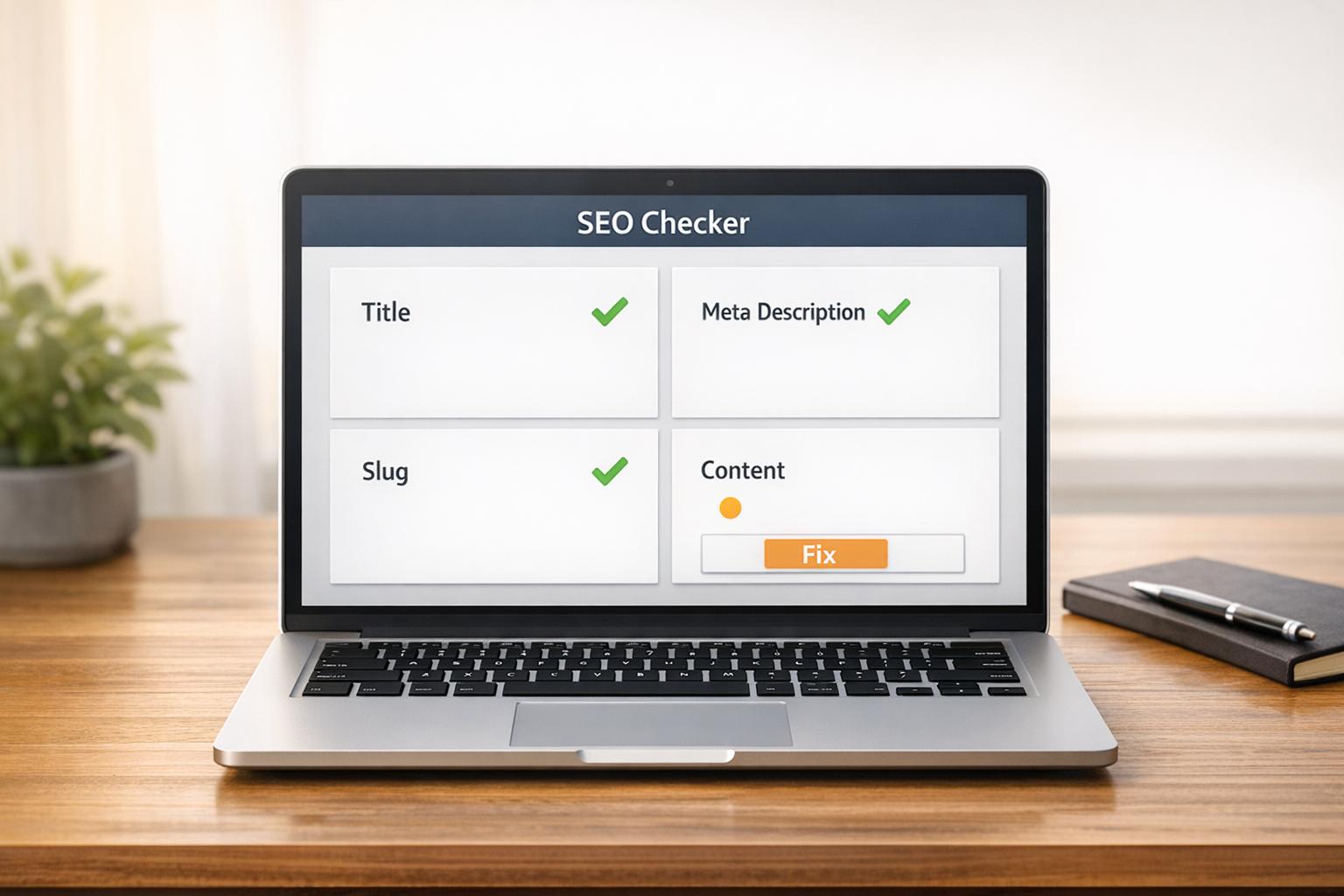
SEO Checker
Check on-page SEO before you hit publish
A strong page doesn’t need guesswork. An SEO Checker helps you review the basics that influence how clearly a page signals its topic to search engines and readers alike. Instead of digging through a long manual checklist, you can paste in your draft and see whether the target keyword appears in the right places, from the title and meta description to the opening paragraph and headings.
A practical way to spot weak points
This kind of review is especially useful when you want fast, actionable feedback. A good on-page SEO checker can flag a missing H1, a title that’s too short, thin content, repeated headings, or signs that keyword use is starting to feel forced. It also gives you simple metrics such as word count, keyword frequency and link totals, which makes quality control much easier.
Built for single-page reviews
If you’re updating one article, landing page or service page, a focused SEO Checker is often more useful than a broad site crawl. You get a cleaner report, clearer priorities and a quicker path to improvement without unnecessary complexity.
FAQs
What does this SEO Checker actually review?
It focuses on the main on-page elements for a single page or article. That includes whether your target keyword appears in the title, meta description, URL slug, opening paragraph, headings, image alt text entries where available, and naturally across the body copy. It also measures title length, meta description length, word count, keyword frequency, estimated keyword density, heading count, and internal or external link counts if links are present in the text.
Is the feedback rules-based or does it generate content automatically?
The core review is deterministic and rules-based, which means the same input will produce the same checks and scoring every time. That makes it useful for consistent editing workflows and QA. If rewrite suggestions are offered, they should stay short, specific and tied directly to the issue found rather than rewriting the whole page for you.
Who is this tool best for?
It’s a good fit for marketers, editors, bloggers, SEO freelancers and small business owners who want a fast review before publishing. If you’re working on a landing page, blog post, service page or product guide, this tool helps you catch common on-page issues quickly without needing a more complex platform.