top of page

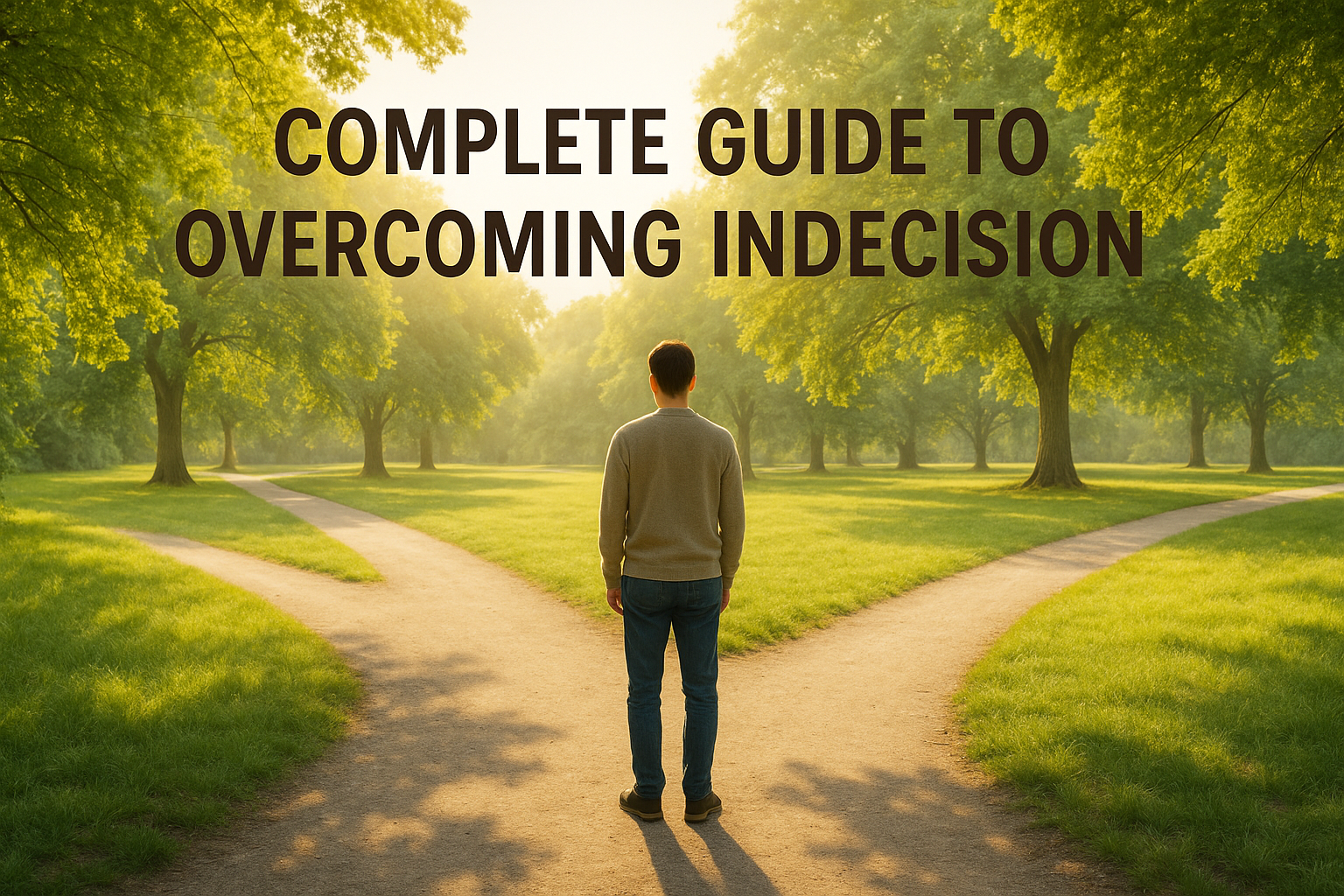
Complete Guide to Overcoming Indecision

  • Writer: Harry Snape
    Harry Snape
  • Nov 15, 2025
  • 17 min read

Updated: Dec 8, 2025

Indecision is more than just hesitation - it drains your energy, impacts relationships, and holds back progress. Struggling to make decisions can lead to mental fatigue, stress, and missed opportunities in both your personal and professional life. This guide breaks down why indecision happens and provides practical steps to help you decide with clarity and confidence.


Key Takeaways:

  • Understand the impact: Indecision causes stress, damages relationships, and erodes trust at work.

  • Shift your mindset: Focus on progress over perfection and accept that uncertainty is unavoidable.

  • Practical tools: Use decision-making frameworks, set deadlines, and practise small daily decisions.

  • Build confidence: Reflect on past decisions, seek feedback, and track your progress with a decision journal.

By following these steps, you can turn decision-making into a skill that reduces stress and boosts your confidence.


Why Am I So Indecisive?


Why You Struggle with Decisions

The impact of indecision goes far beyond wasting time - it can seep into every corner of your life. To break free from this cycle, it's important to understand why making decisions feels so challenging. Often, the roots of indecision lie in deeply ingrained psychological, environmental, and behavioural factors.

For many professionals, indecision isn't a sign of weakness or a personality flaw. Instead, it can stem from a heightened awareness of the potential outcomes of each choice. The more complex and far-reaching the decision, the harder it can be to pick a single path forward.


What Triggers Your Indecision

Several factors can make decision-making feel overwhelming. Fear of making the wrong choice is a big one, especially when paired with perfectionism and the weight of responsibility. If your career has been built on achieving high standards, the idea of an imperfect outcome can feel like a personal failure. This can lead to endless research and over-analysis as you search for a "perfect" solution that satisfies every concern and stakeholder.

Ironically, too much information can make things worse. With unlimited access to data, it's tempting to believe that just a little more research will reveal the ideal choice. But instead of clarity, this often leads to "analysis paralysis", where every new piece of information raises more questions rather than answers.

The need to balance conflicting interests also plays a role. Senior professionals, for instance, often have to juggle the demands of shareholders, employees, customers, and regulators. When these priorities clash, trying to make everyone happy can feel impossible, leading to prolonged hesitation. Tight deadlines only add to the pressure, making it even harder to think clearly.

Past negative experiences can also leave a lasting mark. If a previous decision led to a failed project, team conflict, or financial loss, your brain may overestimate the risks of future choices, amplifying hesitation.

These triggers - whether internal or external - don't just slow you down; they also take a toll on your mental well-being.


How Indecision Affects Your Mind

The mental strain of indecision is more than just frustrating - it can be exhausting. Your brain sees unresolved decisions as unfinished tasks, keeping them in an ongoing loop that drains your mental energy, even when you're focused on something else.

This constant loop fuels overthinking. Your mind replays pros and cons endlessly, often during quiet moments like lying in bed, commuting, or even showering. Instead of finding solutions, you end up stuck in a mental rut.

Decision fatigue builds up over the course of a day, making each subsequent choice feel harder than the last. After spending hours agonising over a major decision, even something as simple as scheduling a meeting can feel overwhelming.

Indecision also activates your brain's stress response. The amygdala, which is responsible for detecting threats, treats unresolved decisions as emergencies. This triggers the release of stress hormones like cortisol and adrenaline, putting your body in a constant state of alertness that's mentally and physically draining.

When you're stuck in this stress cycle, it becomes harder to think creatively or focus on long-term strategies. Instead, your brain narrows its attention to immediate concerns, making it difficult to see the bigger picture or come up with innovative solutions.

Sleep often takes a hit, too. As your brain replays different scenarios, it can keep you awake or lead to restless nights filled with anxiety-driven dreams about work or unresolved issues.

But the effects of indecision don't stop at your mental health - they can ripple into your personal and professional relationships.


How Indecision Damages Your Relationships

The stress of indecision doesn't just stay in your head - it often spills over into your relationships. Family members, in particular, feel the impact, as they deal with cancelled plans or your emotional unavailability when you're preoccupied with unresolved choices.

Everyday decisions, like picking a restaurant or planning a weekend activity, can turn into draining debates when indecision becomes a habit. Over time, your partner may grow frustrated with the inability to make simple choices, adding tension to the relationship.

Children are especially perceptive and may interpret your hesitation as uncertainty about their needs or priorities. This can create a sense of instability, which might undermine their trust and emotional security.

Supporting someone who struggles with chronic indecision can also be emotionally taxing. Partners often end up taking on more decision-making responsibilities, creating an imbalance where one person carries most of the mental load for the household.

Social relationships can also take a hit. If indecision makes it hard for you to commit to plans, friends may start leaving you out of activities. This social isolation can deepen the stress you're already feeling, creating a vicious cycle.

In the workplace, indecision can erode trust and undermine your effectiveness as a leader. Teams rely on clear direction to perform well, and prolonged uncertainty about priorities or resources can create anxiety throughout the organisation. Without guidance, team members may act on assumptions, leading to misaligned efforts or wasted work.

Trust is fragile, and delays in decision-making can damage your reputation for reliability, even if your eventual choices are sound. Over time, this can weaken your leadership credibility and morale within your team.

The combined strain on your mental health and relationships creates a feedback loop where stress makes decision-making even harder. Recognising these challenges is the first step toward changing how you approach decisions.


Change Your Thinking to Make Better Decisions

Once you’ve recognised how indecision takes a toll, the next step is to shift your mindset. Changing how you think about choices can help you see decision-making as a chance to move forward, rather than a source of stress. By rethinking your approach to uncertainty and adopting a more adaptable mindset, you can turn hesitation into action.

Overthinking only makes problems worse. Mental strategies can break that cycle, giving you the clarity and confidence needed to make decisions more effectively. A change in perspective can transform indecision into progress.


Focus on Progress, Not Perfection

Let go of the idea that you need to make the “perfect” choice. Perfectionism is a major roadblock when it comes to making decisions. Striving for flawless outcomes turns even small choices into overwhelming tasks, leaving you stuck in endless analysis. The truth is, the perfect solution rarely exists.

Most decisions aren’t set in stone. Even choices that seem final often lead to unexpected opportunities for growth or adjustment. By focusing on making progress rather than finding a perfect answer, decision-making becomes less intimidating.

Instead of asking, “What’s the perfect choice?” try asking, “What choice moves me forward?” This subtle shift changes everything. It’s no longer about meeting an impossible standard but about creating momentum.

Taking action brings clarity. When you make a decision and move forward, you gain insights that you couldn’t have predicted during planning. This feedback allows you to make adjustments based on real-world results, not just hypothetical scenarios. Often, a quick, “good enough” decision is far better than a perfect one made too late.

Start practising this mindset with smaller, everyday decisions. Whether it’s choosing a place to eat, scheduling a meeting, or picking a book, try making quicker choices without overthinking. You’ll likely find that these “imperfect” decisions work out just fine, and the time saved can be used on more important matters.


Accept Uncertainty and Move Forward

Once you’ve let go of perfection, it’s time to embrace uncertainty. Life is full of unknowns, and trying to eliminate them completely before making a decision is exhausting - and pointless. Complete certainty is almost never available when you need it.

Accepting uncertainty doesn’t mean being careless. It means recognising that you can make thoughtful decisions even when you don’t have all the answers. The goal is to make the best choice you can with the information you have, while staying flexible enough to adapt as things change.

Focus on what you can control. You can’t predict market shifts, other people’s reactions, or unexpected events, but you can control your preparation, decision-making process, and how you respond to outcomes. By concentrating on these controllable elements, you’ll reduce anxiety and improve the quality of your decisions.

Set a deadline for your decisions and stick to it. This prevents you from getting stuck in endless research and forces you to act based on the information you’ve gathered within a reasonable timeframe.

Another helpful approach is to prepare for different scenarios instead of trying to predict one specific outcome. Think about what you’ll do if things go better than expected, worse than expected, or as planned. Having strategies for various possibilities reduces anxiety and makes you feel more prepared.

Taking action shrinks uncertainty. When you’re stuck in analysis, uncertainty feels overwhelming because it’s abstract and limitless. But once you make a decision and start implementing it, uncertainty becomes concrete and manageable. You’re no longer wrestling with infinite possibilities - you’re addressing specific challenges.


Know Yourself and Be Kind to Yourself

Improving your decision-making starts with self-awareness. Understanding your own tendencies, triggers, and biases helps you spot when you’re likely to get stuck, so you can intervene before indecision takes over.

Pay attention to the types of decisions you find most difficult. For some, financial choices are the challenge; for others, it’s career moves or personal relationships. Identifying your patterns allows you to create strategies tailored to your toughest decision-making areas.

Notice your emotional and physical cues - like tension, racing thoughts, or irritability - and act before stress escalates.

Your decision-making style also plays a role. Some people make decisions quickly but might need to slow down and gather more information. Others spend too much time researching and need to practise making faster choices. Knowing your natural tendencies helps you balance your strengths and weaknesses.

Self-compassion is essential for breaking the indecision cycle. If you’re overly critical of past mistakes, you’ll hesitate more in the future, fearing both failure and your own self-judgement. This fear can be just as paralysing as worrying about external consequences.

Treat yourself with the same kindness you’d offer a friend. Mistakes are part of learning, not proof of failure. Creating a supportive inner environment encourages you to take risks and learn from outcomes.

Celebrate your decision-making successes, no matter how small. If a quick choice works out reasonably well, take a moment to acknowledge it. Positive reinforcement builds confidence and makes future decisions feel less daunting.

Consider keeping a decision journal. Write down your important choices, the reasoning behind them, and their outcomes. Over time, you’ll notice patterns in your decision-making and see evidence that you’re more capable than you might think. Even when things don’t go as planned, you’ll likely find that your choices turn out better than expected.

The aim isn’t to become flawless at making decisions - it’s to become confident, adaptable, and ready to learn from whatever comes your way.


Simple Tools for Better Decisions

Making big decisions can feel overwhelming because of the sheer number of factors involved. By breaking them down into smaller, manageable steps, you can reduce feelings of anxiety and avoid the paralysis that often comes with overthinking.

This approach also helps tackle the issue of analysis paralysis.

Conducting small tests and gathering focused research allows you to identify the best possible options, even when you don’t have all the information. These tools, combined with a shift in mindset, can make both everyday choices and major decisions much more straightforward.


Build Confidence Through Practice

Confidence in decision-making isn't something you're simply born with - it’s a skill you cultivate through steady, intentional practice. Much like learning to play an instrument or mastering a sport, the more you work at it, the sharper and more dependable your decision-making becomes.

The trick is to start small and build from there. By regularly practising decisions, you train your brain to handle choices more naturally and with less stress. Even small, everyday decisions can help you develop this valuable skill.


Start with Small Daily Decisions

Your daily routine offers plenty of chances to practise making quick, low-stakes decisions. For instance, decide what to wear in under 30 seconds, pick your breakfast without overthinking, or choose your route to work based on your first instinct. These seemingly minor choices are like mental workouts, teaching your brain that decision-making doesn’t need to be a drawn-out or nerve-wracking process.

Try setting yourself a simple challenge: make five decisions each day in under 10 seconds. It could be as easy as picking a playlist for your commute, deciding which task to tackle first, or choosing what to cook for dinner. The goal isn’t to make flawless choices - it’s to train yourself to decide quickly and with confidence.

Another helpful tip is to embrace the "good enough" principle. Instead of searching endlessly for the absolute perfect option, go with the first one that meets your basic needs. For example, if you’re shopping for a new laptop and find one that fits your budget and requirements, go for it instead of spending weeks comparing every model out there.


Learn from Your Past Decisions

Reflecting on your past choices is a great way to improve your decision-making skills. Your history of decisions - both good and bad - contains valuable lessons. Many people either dwell too much on their mistakes or avoid thinking about them altogether, but neither approach helps you grow.

Consider keeping a simple decision journal. Jot down significant choices you’ve made over the past year, along with why you made them and what the outcomes were. Look for patterns in your thinking. Do you tend to overanalyse certain types of decisions? Are there areas where your instincts often lead you in the right direction?

Pay special attention to decisions you were initially anxious about but that turned out well. These moments can serve as proof that your judgment is often better than your fears suggest. When facing similar choices in the future, you can draw confidence from these past successes.

Mistakes, on the other hand, can be reframed as learning opportunities. Instead of beating yourself up, ask questions like: What information was I missing? What could I do differently next time? How can I prepare better in the future? This kind of analysis helps you turn missteps into meaningful lessons, removing the emotional sting from the experience.


Get Feedback and Support

While daily practice builds confidence, seeking input from others can take your decision-making to the next level. Feedback from trusted sources can help you see blind spots and improve both the quality of your choices and your confidence in making them.

Identify three to five people whose judgment you trust - perhaps a mentor for career advice, a financially savvy friend for money matters, or a family member who understands your values. These individuals can act as your personal "advisory board" for important decisions.

When asking for advice, be clear about what you need. Are you looking for someone to help you weigh options or share their own experiences? Clear communication ensures you get the most useful guidance and avoids confusion.

If you’re looking for more structured support, a decision-making coach might be a great resource. A coach can offer tailored strategies that align with your natural thinking style and help you address specific challenges. They can also help you identify patterns in your decision-making and develop techniques to improve your confidence.

For those who prefer a group setting, communities like The Catalyst Method offer a supportive environment to practise decision-making. Their 30-day confidence challenge connects you with others facing similar personal and professional challenges. Through live calls and discussions, you can test your thinking and gain new perspectives.


Resources for Long-Term Growth

Building confidence in decision-making is a continuous process that thrives on the right mix of tools, community, and guidance. While the strategies you've learned so far lay a strong foundation, having access to well-structured programmes, insightful resources, and professional support can help you refine and sustain your progress over time. Think of these resources as a safety net and a springboard - ready to catch you during tough moments and propel you forward when you're ready to grow.


The Catalyst Method's 30-Day Confidence Challenge

If you're looking to take your decision-making skills to the next level, The Catalyst Method's 30-day programme is a great place to start. Designed with high-performing professionals in mind, this challenge focuses on practical, daily exercises to strengthen your confidence in making decisions.

The programme is built around five actionable challenges, each designed to help you apply decision-making strategies in real-world scenarios. Instead of overwhelming you with theory, it prioritises hands-on practice, giving you tools that are immediately useful in your daily life.

One of the standout features is the opportunity to connect with a community of professionals tackling similar challenges. Through live calls and group interactions, you’ll gain accountability and learn from shared experiences. This collaborative environment often sparks insights you might not reach on your own.

The programme also includes meditation exercises tailored for decision-making. These aren't your typical mindfulness routines - they're specifically crafted to calm overthinking and create mental clarity, which is crucial for breaking free from analysis paralysis.

Perhaps most importantly, the programme provides direct coaching support throughout the 30 days. Whether you're stuck on a tricky decision or struggling with a specific challenge, you’ll have access to expert guidance to help you move forward. This immediate feedback can make all the difference in maintaining momentum.

The best part? The programme is available through their free Skool group, making it accessible no matter your budget. You’ll also gain access to bonus content and live call recordings, so you can revisit key lessons whenever you need a refresher.


Books and Tools Worth Exploring

While structured programmes are invaluable, building a personal collection of decision-making resources ensures you always have support at hand. A well-chosen book or tool can provide fresh perspectives and practical frameworks when you're navigating tough choices.

Some must-reads include:

  • "Thinking, Fast and Slow" by Daniel Kahneman: This book dives into the two systems of thought that guide your decisions - helping you recognise when to trust your instincts and when to slow down for deeper analysis.

  • "Decisive" by Chip Heath and Dan Heath: The WRAP process outlined here offers practical steps to expand your options, test your assumptions, gain perspective, and prepare for unexpected outcomes.

  • "The Paradox of Choice" by Barry Schwartz: This book explores why having too many options can lead to decision fatigue and provides strategies for simplifying choices without compromising quality.

For added structure, decision-making apps and tools can be incredibly helpful. Simple tools like decision wheels are great for low-stakes choices, while decision trees can help with more complex scenarios. Journaling apps designed for reflection can also be a game-changer, allowing you to track your decisions, evaluate outcomes, and identify patterns over time.


Professional Coaching and Mentorship

Books and tools are excellent for self-guided improvement, but there are times when personalised support is invaluable. If you're facing high-stakes decisions - whether in your career, relationships, or finances - working with a coach or mentor can provide the tailored insights you need.

One-to-one coaching offers a customised approach to decision-making. A skilled coach can help you identify patterns in your thinking, address the root causes of indecision, and develop strategies that align with your unique strengths. The Catalyst Method, for example, provides coaching sessions focused on your specific goals, whether you're navigating career changes, relationship decisions, or major life transitions.

Regular check-ins with a coach ensure you stay on track, even when life gets hectic. They can provide an objective perspective when you're too close to a situation to see it clearly, helping you avoid common pitfalls and make sound choices.

Mentorship is another powerful resource. A mentor who has faced similar challenges can share lessons from their own experiences, offering insights into the long-term impact of different decisions. Their guidance can help you weigh your options more effectively and approach complex situations with confidence.

Interactive learning opportunities like workshops and webinars also bring immense value. These sessions allow you to engage with both experts and peers, often leading to breakthroughs that wouldn't occur through solo study. The shared discussions and real-time feedback can deepen your understanding and spark new ideas.

Investing in professional coaching or mentorship often pays off far beyond the immediate benefits. The skills and confidence you develop will continue to enhance your decision-making abilities, making you more effective in both your personal and professional life.


Conclusion: Take Control of Your Decisions

Breaking free from indecision starts with building the confidence to act, even when uncertainty looms. By shifting your mindset, using practical tools, and practising consistently, you lay the groundwork for a more decisive life. Each choice you make offers lessons about your values, priorities, and strengths.


Steps to Start Today

Put these insights into action with simple, immediate steps.

Begin with small decisions: pick an outfit, decide on lunch, or choose a podcast without hesitation. These seemingly minor choices strengthen your decision-making skills, preparing you for more significant challenges.

Try using a decision matrix for any current dilemma. It can be as simple as drawing two columns on a piece of paper - one for pros and one for cons - or a more detailed scoring system if needed. Writing things down often brings clarity and highlights the best option hidden beneath your overthinking.

Set a deadline for decisions. If you’re stuck, commit to making a choice by a specific time - whether it’s by the end of the day, week, or month. This limits endless deliberation and encourages you to work with the information you already have, rather than chasing perfection.

Adopt the "good enough" approach for low-stakes decisions. When deciding on a restaurant, book, or route to work, go with the first reasonable option instead of searching endlessly for the ideal one.

Keep a decision journal to track your progress. Over time, review your entries to spot patterns in your thinking and evaluate how your choices turned out. This reflective practice boosts self-awareness and helps refine your decision-making process.


Your Path to Confident Living

Confident decision-making can transform every part of your life.

Taking decisive action reduces stress, strengthens relationships, and opens doors in your career. Instead of agonising over choices, you’ll sleep better, feel more at ease, and face challenges with a calmer outlook. Friends and family will value your clarity, while colleagues and clients will respect your ability to lead and make firm decisions.

The ripple effect of decisive living means that each confident choice builds on the last. You’ll start trusting yourself more, taking calculated risks that lead to growth, and earning a reputation as someone who gets things done.

To accelerate this journey, consider resources like The Catalyst Method’s 30-day programme through their free Skool group. This structured support system combines actionable challenges, a supportive community, and direct coaching to help you develop these skills more effectively.

The path to confident decision-making starts now. Each small choice you make today contributes to a future where you feel empowered and aligned with your goals. The confident, decisive version of you isn’t a distant dream - it’s a skill you can begin building right away. Trust yourself to learn, grow, and make choices that truly reflect who you are.


FAQs


What are the key psychological and environmental factors behind indecision, and how can they be managed?

Psychological hurdles like fear of failure, low self-confidence, perfectionism, and anxiety often play a big role in making decisions harder. On top of that, the pressure to meet others' expectations can add another layer of difficulty. From an external perspective, being faced with too many choices can feel overwhelming, often leading to overthinking and indecision.

To tackle these challenges, start by focusing on smaller, less daunting decisions to build your confidence gradually. Setting clear priorities can also provide direction and help you focus on what truly matters. Be kind to yourself - practising self-compassion can ease the pressure and reduce the fear of making mistakes. Simplify your choices by narrowing down the options, and consider using tools like decision matrices to weigh the pros and cons logically. With time and practice, these techniques can make decision-making feel less overwhelming and more manageable.


How can making small daily decisions help reduce overthinking and improve confidence in decision-making?

Making small, everyday decisions is an effective way to curb overthinking and sharpen your decision-making abilities. Whether it’s deciding what to have for lunch or which route to take on your commute, these seemingly minor choices can help you build self-trust and confidence in your ability to judge situations.

This habit fosters a sense of control over your actions, gradually making bigger decisions feel less overwhelming. Plus, it shifts your mindset towards valuing progress over perfection - an essential step in breaking free from analysis paralysis.


How does self-compassion help with making better decisions, and how can you develop it?

Self-compassion is about treating yourself with the same kindness and understanding you'd offer a close friend, especially when things go wrong or you make a mistake. It can be a game-changer for decision-making, as it helps cut through self-doubt and overthinking, giving you the clarity and confidence to choose wisely.

Here’s how you can nurture self-compassion:

  • Be kind to yourself: Swap out harsh self-criticism for thoughts that are supportive and encouraging.

  • Acknowledge shared humanity: Remember, setbacks and struggles are something everyone experiences - they’re simply part of being human.

  • Practise mindfulness: Notice your emotions without judgement and focus on staying in the present moment.

By embracing self-compassion, you’ll find it easier to approach decisions with a calm and steady mindset, even when the stakes feel high.


Related Blog Posts


Comments


bottom of page