
How to Manage Decision Fatigue with Prioritisation
Decision fatigue happens when you make too many decisions in a day, leaving you mentally drained and less productive. It can lead to procrastination, impulsive choices, and struggling to focus on what really matters. The solution? Prioritisation. By organising tasks and automating routine decisions, you save mental energy for important choices.
Key takeaways:
- Decision fatigue: Mental exhaustion from constant decision-making.
- Impact: Reduces focus, productivity, and leads to poor choices.
- Solution: Use tools like the Eisenhower Matrix, the 90-second rule, and task batching to simplify your day.
- Benefits: 40% less mental fatigue, better focus, and more energy for meaningful work.
Start small: Plan your day with the Eisenhower Matrix, limit overthinking with the 90-second rule, and automate repetitive tasks like emails or scheduling. These changes help you reclaim time and mental clarity.
How to Reduce Decision Fatigue
How Prioritisation Reduces Decision Fatigue
Prioritisation simplifies the endless stream of daily decisions into one clear, initial choice. Instead of constantly wondering, "What should I do next?" throughout the day, you follow a pre-planned priority list. This shift alone eliminates numerous decisions that quietly drain your mental energy.
Picture a typical morning without prioritisation. You might open your email, notice a Slack message, remember you need to schedule a meeting, debate whether to start a report, and then get sidetracked by a colleague’s question. Each moment requires a decision: Should I handle this now or later? Is it urgent? Can it wait? However, if you decide early in the day which three tasks deserve your focus, you remove the need to constantly reassess. You simply follow the plan.
Structured prioritisation breaks this exhausting cycle. A 2021 study in Nature Human Behaviour found that people who used prioritisation techniques reduced mental fatigue by 40%, freeing up their mental capacity for more critical tasks. That’s a game-changer - it can mean the difference between finishing your day completely drained or still having energy for yourself and others.
The science backs this up. Your prefrontal cortex, the part of your brain responsible for decision-making, has limited energy. Every choice you make depletes this reserve. Studies show that structured routines shift decision-making from the prefrontal cortex to the basal ganglia, reducing mental effort by 27%. In essence, effective prioritisation allows your brain to move from conscious, effortful decisions to more automatic, energy-efficient processing.
Prioritisation also helps you avoid the trap of reacting to low-value tasks - those that feel urgent but aren’t necessarily important. Without a clear framework, it’s easy to get pulled into responding to notifications, emails, or quick requests from colleagues. These tasks demand immediate attention but often don’t contribute much to your bigger goals. Meanwhile, the truly important work - strategic projects, challenging conversations, or long-term planning - gets pushed aside. By identifying which tasks genuinely matter and which can be delayed, delegated, or dismissed, you reserve your decision-making power for work that has a real impact.
The benefits aren’t just personal. A trial at Imperial College London found that leaders using prioritisation frameworks improved their task prioritisation accuracy by 33% in just six weeks. This boost comes from better energy management and smarter decision-making.
Next, we’ll dive into practical tools to build prioritisation into your daily routine. You’ll explore the Eisenhower Matrix, a simple system that helps you categorise tasks by urgency and importance so you can focus on what truly matters. The 90-Second Rule provides a quick way to rank and act on tasks, cutting through overthinking and decision paralysis. Other techniques like the Rule of Three, task batching and time blocking, and setting time limits for decisions will form a system to conserve mental energy for high-value work. The payoff isn’t just improved productivity - it’s a sense of calm and control, knowing your energy is spent where it counts most.
For those who understand prioritisation in theory but struggle to implement it consistently - perhaps due to indecision, self-doubt, or a lack of accountability - structured coaching can make all the difference. The Catalyst Method (https://thecatalystmethod.co.uk) offers a 30-day programme designed to build confidence and decisiveness. Through actionable challenges, community support, live calls, and direct coaching, you can practise prioritisation in a supportive environment. This helps you turn prioritisation strategies into habits that stick, even under pressure.
The strategies ahead are tailored for a typical UK workday, whether you start at 09:00 or earlier. You’ll learn how to tackle high-value tasks in the morning, protect time for focused work, and save routine admin for later in the day when decision fatigue naturally sets in. By the end of this guide, you’ll have a clear, repeatable system to manage your mental energy and make decisions with confidence.
The Eisenhower Matrix: Sorting Tasks by Urgency and Importance
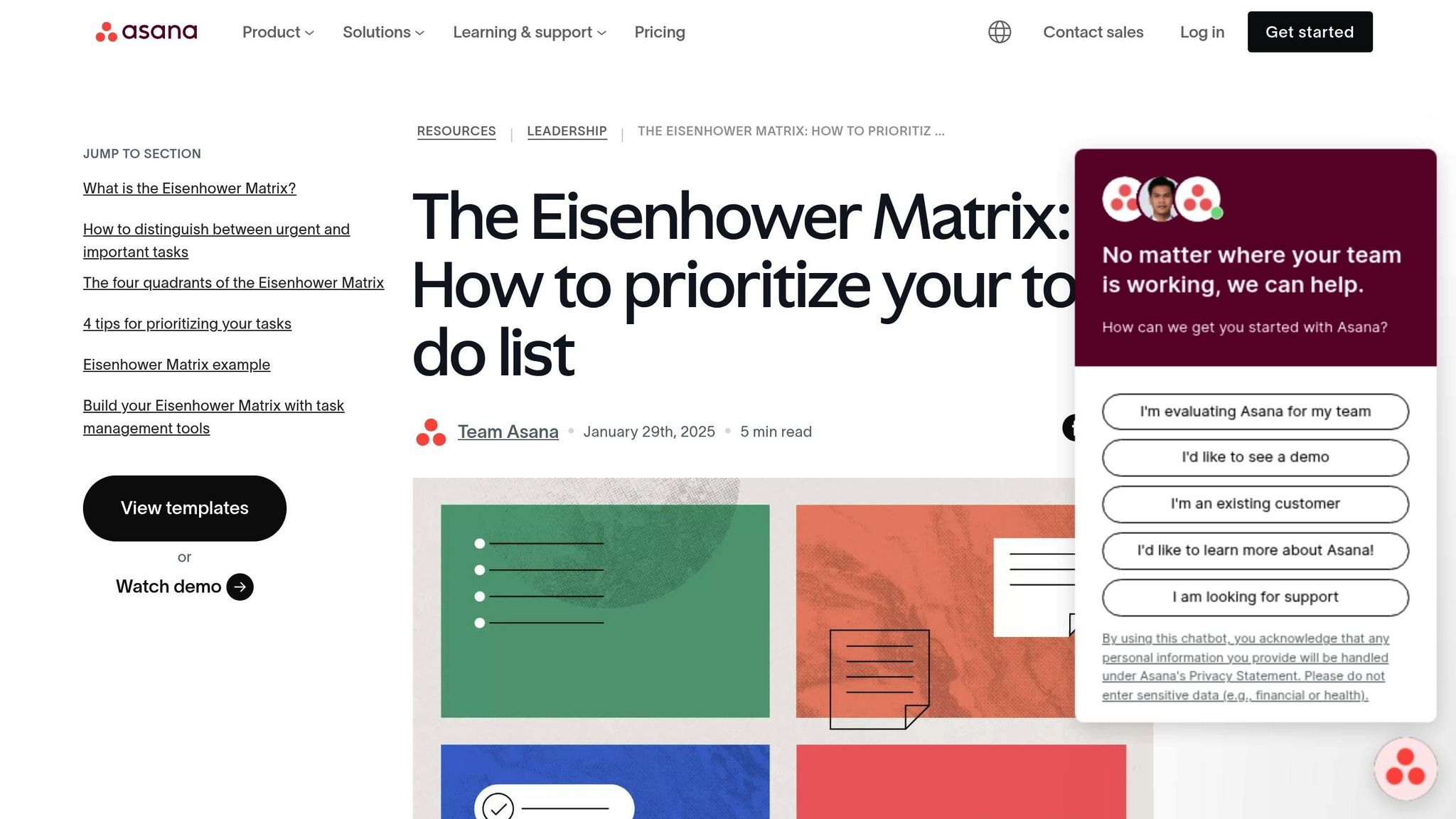
The Eisenhower Matrix is a simple yet powerful tool that helps you organise your tasks into four categories. Instead of being overwhelmed by a never-ending to-do list, you classify each task based on two criteria: urgency (does it need immediate attention?) and importance (does it significantly impact your goals or well-being?). This visual approach makes daily task management much more manageable.
Named after US President Dwight D. Eisenhower, who famously said, "What is important is seldom urgent, and what is urgent is seldom important," this method encourages you to focus on strategic priorities rather than reacting to every immediate demand.
The strength of the matrix lies in its ability to streamline decision-making. By sorting tasks into clear categories upfront, you avoid the mental drain of constantly re-evaluating priorities. A 2020 study found this approach can reduce mental effort by 27%. In essence, the matrix transforms decision-making into a structured, repeatable process, saving time and energy.
In the UK, whether you're juggling client deadlines or personal commitments, using this matrix can ease decision fatigue. It integrates seamlessly into practices like daily stand-ups or weekly planning sessions. You can draw it on A4 paper, a whiteboard, or even use a digital app to keep things organised.
The Four Quadrants Explained
Here’s a closer look at the four quadrants and their unique roles:
-
Urgent & Important
These tasks have immediate deadlines and serious consequences if delayed. They often relate to core responsibilities or well-being. Examples include submitting a tender on its final day or resolving a critical system outage. If this quadrant is consistently overflowing, it may indicate you're neglecting longer-term priorities. -
Important but Not Urgent
These tasks contribute to long-term goals like career growth, health, or financial stability but don’t require immediate action. Examples include updating your CV or setting up a regular ISA contribution. Ignoring these tasks can lead to a cycle of constant firefighting instead of proactive planning. -
Urgent but Not Important
These tasks demand attention but have little long-term impact and often don’t need to be handled by you personally. Examples include minor admin work, emails, or meeting requests with no clear purpose. The best approach is to delegate or set boundaries. -
Neither Urgent Nor Important
These activities don’t add value and often serve as distractions, such as excessive social media scrolling or unnecessary meetings. While leisure is important, it should be intentional and time-limited rather than filling every spare moment.
How to Apply the Eisenhower Matrix
Creating and maintaining the matrix is straightforward. It takes about 15–20 minutes initially and just 5 minutes daily to update. Here’s a step-by-step guide:
-
Brain dump
Spend 5–10 minutes listing all your tasks to clear your mind. -
Assess each task
For each item, evaluate its urgency (does it have an immediate deadline?) and importance (does it have significant consequences or align with your goals?). Tasks can fall into one, both, or neither category. -
Draw the matrix
Create a 2×2 grid on paper, a whiteboard, or digitally, labelling the quadrants clearly. -
Sort tasks into quadrants
Place each task in the appropriate quadrant. If you’re unsure, ask, "Would delaying this by 24–72 hours cause real harm?" Be honest - sometimes tasks feel urgent simply because someone else wants them done quickly. -
Set limits for each quadrant
Keep the Urgent & Important list manageable - three to five items per day is realistic. For Important but Not Urgent tasks, schedule specific times in your calendar to ensure they don’t get overlooked.
Once tasks are sorted, act based on their quadrant:
-
Urgent & Important → Do now
Dedicate 60–90 minutes of focused time to these tasks. If the list is too long, prioritise by deadline or impact. -
Important but Not Urgent → Schedule
Block time in your calendar for these tasks and treat those slots as non-negotiable unless there’s a genuine emergency. -
Urgent but Not Important → Delegate
Assign these tasks to someone else who is capable and available. Provide clear instructions and step back to avoid micromanaging. -
Neither Urgent Nor Important → Eliminate or limit
Remove unnecessary tasks or time-box them as intentional leisure, like 30 minutes of TV after exercising.
Make reviewing your matrix a daily habit. Spend 5 minutes at the start or end of each day updating it to reflect your current priorities. This practice helps you stay on top of tasks and prevents decision fatigue.
The matrix is especially useful for managing the constant flow of emails, messages, and small daily decisions that can drain your mental energy. For instance, you might decide that "Urgent but Not Important" emails will only be handled in a batch at 4 p.m., saving you from constant interruptions. Similarly, it ensures that "Important but Not Urgent" tasks get the attention they deserve, reducing the risk of last-minute crises.
Common Pitfalls to Avoid
Avoid labelling too many tasks as urgent. When everything is urgent, nothing truly is. Before assigning a task to the Urgent & Important quadrant, ask yourself, "What are the real consequences if I delay this by 24–72 hours?" Also, don’t neglect Important but Not Urgent tasks. Skipping these often leads to unnecessary stress and last-minute scrambling.
The 90‑Second Rule for Faster Daily Decisions
When your to-do list feels never-ending, it’s easy to spend more time deliberating than actually doing. That’s where the 90‑second rule comes in - a structured approach that helps you assess a decision, prioritise it, and take action in just 90 seconds. Instead of endlessly weighing options, this method pushes you to act quickly, cutting down on overthinking and reducing the number of small, draining decisions you face each day. Similar to the Eisenhower Matrix, this tool simplifies your workload.
The 90‑second rule aligns with the OODA loop (Observe, Orient, Decide, Act), a natural decision-making cycle your brain already follows. By setting a strict time limit, it encourages deliberate, focused choices rather than reactive ones.
This method shines when applied to everyday, low- or medium-stakes decisions that tend to pile up - like sorting emails, handling meeting invites, minor spending choices, or planning the next hour of your day. For example, a manager in London might use it to decide which tasks to tackle before lunch, handle non-essential meeting requests, or determine whether to respond to a message immediately or save it for later. At home, it could help you pick an evening priority - whether that’s cooking, working out, or running errands - without second-guessing. The trick is to reserve this quick approach for routine decisions, leaving more complex or high-stakes matters for deeper consideration.
Now, let’s break down how the process works.
The 4 Steps of the 90‑Second Rule
This method follows four straightforward steps, guiding you from identifying a decision to taking action:
- Observe (15–20 seconds): Acknowledge the decision without jumping to conclusions. For instance, if an email is flagged as "urgent", take a moment to understand the actual request - whether it’s approving a document, confirming a meeting, or providing feedback - without reacting immediately.
- Orient (20–30 seconds): Contextualise the decision by asking quick questions like, “How does this align with my top priorities today?”, “What happens if I don’t address this now?”, and “Should I handle this, or can it be delegated or delayed?” Studies show that even basic categorisation can improve task prioritisation accuracy by about 33% for leaders. Keep this step short to avoid overanalysing.
- Decide (15–20 seconds): Use your assessment to make a clear choice - whether to “Do it now,” “Schedule it,” “Delegate it,” or “Drop it.” For example, you might decide, “This report is crucial - start it now,” or, “This email can wait - batch it with admin tasks later.”
- Act (use the remaining seconds): Immediately take a step to implement your decision. Begin the task, add it to your calendar, or send a quick delegation message. This transition from thinking to doing prevents you from revisiting the decision, reducing mental fatigue. Research suggests that structured decision routines can lower mental effort by about 27%.
By repeating these steps regularly, the process becomes faster and more instinctive over time.
Now that you’ve got a quick decision-making framework, let’s talk about when to tackle your most important choices.
When to Make Important Decisions
Your brain is sharpest early in the day, which is why experts recommend making complex or high-stakes decisions in the morning. Before 09:00, you’re less likely to face interruptions, and your mental energy is at its peak, leading to better judgement and self-control. As the day progresses, fatigue sets in, making it easier to default to the simplest or most familiar choice instead of the best one.
A practical approach is to spend the first 10–15 minutes of your workday applying the 90‑second rule to key decisions. Identify two or three tasks that will define your day’s success, decide what absolutely needs to be finished before lunch, and determine which meetings are worth attending. You could also block off an early morning hour (say, 08:00–09:00) for focused work or strategic planning, using the rule to guide your next steps. Later in the day, when energy wanes, save this method for routine tasks like admin or email triage.
For those who struggle with decision paralysis, pairing the 90‑second rule with a structured programme can bring lasting change. Options like The Catalyst Method’s 30‑day challenge or 12‑week one-to-one coaching focus on building confidence through repeated, time-limited actions, accountability, and reflection. Over time, these practices can make quick, clear decision-making feel more natural, cutting down on daily stress and the fear of making the wrong call.
sbb-itb-6d98f47
3 More Techniques to Simplify Prioritisation
Once you've got the basics of quick decision-making down, these additional methods can help streamline your workflow even further. Alongside tools like the Eisenhower Matrix and the 90-second rule, these approaches aim to lighten mental effort and fit seamlessly into both your work and personal life.
The Rule of Three
The Rule of Three is all about simplicity: instead of trying to tackle a never-ending to-do list, focus on just three key outcomes each day. These aren't meant to cover everything you do, but they define what a productive day looks like. By narrowing your focus, you reduce the number of tasks competing for your attention, which helps clear mental clutter and makes it easier to handle unexpected challenges.
To use this method, start your day - or plan the night before - by writing down three must-do priorities. For example, in a UK office setting, these might be: "Complete Q1 sales report", "Prepare slides for tomorrow's client meeting", and "Call supplier to resolve delivery issue." At home, priorities might include tasks like booking appointments, exercising, or meal prep. Keep these three goals visible - on a Post-it note by your desk or at the top of your notebook - so you stay focused, and any additional tasks remain optional rather than essential.
Task Batching and Time Blocking
Task batching involves grouping similar tasks - like emails, phone calls, or admin work - and tackling them in dedicated blocks of time instead of spreading them throughout the day. This reduces the mental drain caused by switching between tasks. For instance, you could set aside two 30-minute slots - one mid-morning and one mid-afternoon - just for emails, allowing you to stay in "communication mode" without constant interruptions.
This approach works well for low-stakes tasks like approving expenses or replying to messages. At work, it might mean bundling non-urgent emails, returning calls, or reviewing CVs. At home, you could batch activities like online shopping, household admin, and meal planning to cut down on decision fatigue.
Time blocking takes batching a step further by assigning specific times in your calendar to different types of work. Here's how a UK professional might structure their day:
- 09:00–09:15: Plan the day and choose top three priorities
- 09:15–11:00: Focused work on a major project
- 11:00–11:30: Respond to batched emails
- 14:00–15:00: Attend meetings or calls
- 16:00–16:30: Handle admin tasks
Treat these blocks as fixed appointments. This not only reduces the need for on-the-fly decision-making but also helps your day follow a more predictable rhythm.
Setting Time Limits for Decisions
Setting time limits, often called time-boxing, means giving yourself a fixed amount of time to make a decision before moving forward. For instance, you might allow 5 minutes to pick a restaurant, 15 minutes to choose a train time, or 30 minutes to evaluate software options. This prevents overthinking and ensures you don't waste unnecessary energy on minor choices.
The trick is to match the time limit to the decision's importance and reversibility. For low-impact choices, like deciding what to eat for lunch, give yourself 1–2 minutes. Medium-impact decisions, like structuring a team meeting, might need 10–20 minutes. For higher-impact but reversible decisions, allocate a specific research period. For example, spend less than 2 minutes on choices that are easily changed, set firm limits for decisions affecting the next few weeks, and reserve in-depth research for long-term commitments.
Picture a London-based marketing manager juggling campaigns, meetings, and family life. On Monday morning, she picks her three top work priorities, blocks 09:30–11:30 for deep work, reserves 11:30–12:00 for emails, and sets 16:00–16:30 for admin tasks. For small creative approvals, she sticks to a 5-minute time limit. At home, she batches meal planning and online grocery shopping into a 45-minute session and uses 2–3 minutes for quick decisions like choosing an outfit. Over time, these habits reduce decision fatigue and free up mental energy.
For those who understand these techniques but still struggle with self-doubt, structured support can make a big difference. A programme like the Catalyst Method offers a 30-day plan with actionable challenges, community support, and coaching. Its 12-week one-on-one coaching includes regular calls and WhatsApp check-ins to help you stick to habits like setting daily priorities, respecting time blocks, and meeting decision deadlines, making these methods second nature.
These strategies, combined with tools like the Eisenhower Matrix and 90-second rule, create a well-rounded system to tackle decision fatigue effectively.
Automating Routine Decisions to Save Mental Energy
After prioritising tasks, the next step to conserving mental energy is automating routine decisions.
Think about this: adults make around 35,000 micro-decisions daily. That’s a staggering number, and it’s no surprise that this constant decision-making can lead to fatigue. For education business owners managing lesson plans, parent communications, staff schedules, and invoices, these small, repetitive choices can sap your energy before you even get to the strategic work that truly matters.
So, what’s the solution? Automate, systemise, and delegate the decisions that don’t require much thought. By creating fixed systems for repetitive tasks, you can free up mental space for more complex challenges. A 2020 study in Neuron revealed that structured decision routines reduced mental effort by 27%, as they rely on the brain’s basal ganglia - the part responsible for habits rather than conscious deliberation.
Identifying Decisions to Automate
Start by tracking your decisions over two or three days. Pay attention to choices you make repeatedly, such as “When should I prepare lessons?”, “Who confirms bookings?”, or “How do I respond to late-payment emails?”. If you find yourself making the same decision more than three times a day, it’s a prime candidate for automation.
For example, education businesses can automate student communications, lesson scheduling, invoicing, and enrolment workflows. Instead of manually sending reminders or chasing payments, set up systems to handle these tasks. A tuition centre might use booking software that allows parents to select lesson times, sends reminders 24 hours before a session, and triggers automatic follow-ups for missed classes.
Quick Wins with Email Automation
Email is another area where automation can make a big difference. Filters and templates can save time on common enquiries about fees, cancellations, or exam boards. For instance:
- Filters: Automatically sort parent enquiries, invoices, and marketing emails into labelled folders.
- Templates: Use pre-written responses for frequently asked questions.
- Scheduled Checks: Set fixed times to check emails, such as at 09:30 and 15:30, and batch-process messages using simple rules: reply, delegate, schedule, or delete.
Delegate Where Possible
Not every decision needs your direct input. Delegate tasks like resource ordering or classroom allocations to trusted staff. For instance, admin staff could handle lesson rescheduling within specific timeframes, apply standard late-payment email templates, or approve small refunds up to £50. However, decisions involving safeguarding or long-term contracts should remain with you.
Take the example of a small tutoring company owner. Initially, they managed all bookings, cancellations, and parent communications themselves. By introducing an online booking system with automatic confirmations and reminders, standardised email templates, and a checklist for onboarding new students, they delegated routine scheduling and follow-ups to an admin assistant. The result? More time for curriculum improvements and staff development, along with reduced stress and fewer episodes of end-of-day “brain fog”.
Simplify Personal Routines
Your personal routines matter too. Deciding in advance what to wear, eating the same breakfast on workdays, or checking messages only at set times can eliminate dozens of trivial choices before your day even starts. Barack Obama famously limited his clothing and food choices to focus his decision-making energy on more critical matters - a strategy that works just as well for education business owners.
Balancing Automation with Personal Connection
Automation doesn’t mean losing the personal touch. Customised email templates and occasional manual check-ins ensure families still feel valued. Reserve your energy for high-impact interactions while letting systems handle the repetitive tasks.
If you find it challenging to implement these strategies consistently, structured support can make a difference. The Catalyst Method (https://thecatalystmethod.co.uk) offers programmes to help you set boundaries, delegate effectively, and stick to your prioritisation systems. Their 30-day programme includes actionable challenges and community support, while their 12-week one-to-one coaching provides regular calls and WhatsApp check-ins.
A Practical Starting Point
Here are some steps to try this week:
- Write down the top 10 routine decisions you make daily.
- Pick two or three decisions to automate, such as lesson scheduling, invoice reminders, or parent communications, and set up simple tools like calendar rules, email templates, or a booking form.
- Create one checklist for a team member to follow, and schedule a weekly review to refine these systems.
As you gradually shift more routine decisions to automation, checklists, or delegation, you’ll notice an increase in mental clarity and more time for strategic work.
Next, we’ll look at how to integrate these automated routines into your daily planning.
Building Prioritisation into Your Daily Routine
Once routine decisions are automated, the next step is creating a clear framework to guide your daily workflow. If you're juggling multiple responsibilities, having a structured routine can mean the difference between constantly reacting to problems and taking charge with a proactive mindset. Research shows that prioritising tasks effectively enhances decision-making quality. The trick is to develop habits that are easy to stick to but provide clarity and focus.
Morning Planning with the Eisenhower Matrix
Start your day with a focused 10-minute planning session using the Eisenhower Matrix. This simple tool helps you categorise tasks based on urgency and importance. Begin by listing everything you need to tackle - whether it’s reviewing reports or responding to an email about payments. Then, sort each item into one of these four categories:
- Urgent and Important: These tasks demand immediate attention, such as resolving a staffing issue for the day or addressing a safeguarding concern.
- Important but Not Urgent: These are activities that contribute to long-term goals, like planning for the next term or organising staff training.
- Urgent but Not Important: Tasks that feel pressing but can be delegated, such as routine emails or booking confirmations.
- Neither Urgent Nor Important: Distractions like social media scrolling or non-essential meetings, which can be eliminated or postponed.
This process creates a clear plan for the day, eliminating the need to second-guess your priorities. Once this foundation is set, you can focus on tackling your most important work when your energy levels are at their peak.
Working on High-Value Tasks During Peak Hours
Your brain’s performance isn’t constant - it fluctuates throughout the day. Most people hit their cognitive peak between 08:00 and 12:00, when the mind is refreshed after a night’s sleep. A 2021 study in Nature Human Behaviour found that using prioritisation techniques reduced mental fatigue by 40%. This makes the morning the ideal time to focus on high-value tasks, such as strategic planning, budget decisions, or curriculum development.
To make the most of this window, try time blocking. Allocate specific hours to different types of work. For instance, you might dedicate 09:00–11:00 to strategic planning, 11:00–12:00 to meetings or teaching, and leave the afternoon for less demanding tasks like handling emails or preparing for the next day. Pair this strategy with regular breaks to keep your mental energy steady throughout the day.
Taking Regular Breaks to Maintain Mental Clarity
Even with a solid prioritisation plan, your brain needs rest to stay sharp. Short, intentional breaks can help you recharge and avoid burnout. Aim for a 5–10 minute break every 60–90 minutes. Use this time to step away from work - take a quick walk, practise some deep breathing, or simply sit quietly.
For those managing a heavy workload, these breaks can prevent you from falling into the "urgency trap" of tackling low-priority tasks just because they seem pressing. By maintaining mental clarity, you’ll ensure that decisions made later in the day are just as thoughtful as those made in the morning. These small pauses also complement the automated systems and decision frameworks you’ve already put in place.
If sticking to these routines feels challenging, structured programmes like The Catalyst Method can help you build these habits step by step. Start by adopting one practice for five days in a row. Once it feels natural, add another. Within a few weeks, you’ll have a daily routine that keeps decision fatigue at bay while simplifying your workflow.
Conclusion
Decision fatigue is a natural mental strain that arises from making too many choices throughout the day. By using structured prioritisation, you can simplify decision-making and conserve mental energy. The strategies outlined earlier - like identifying urgent versus less critical tasks, adopting the 90-second rule to avoid overthinking minor decisions, and focusing on three key outcomes with the Rule of Three - are practical tools to reduce overwhelm and stay on track.
Incorporating techniques like task batching and time blocking can cut down on constant task-switching, while automating repetitive decisions removes the burden of small, recurring choices. The trick is to start small. Instead of trying to use every method at once, pick one or two to test over a week or two. For example, you could begin each morning with the Eisenhower Matrix to organise your tasks on a single A4 sheet, and pair it with the 90-second rule for quick, low-stakes decisions. Track how these changes impact your mental clarity and stress levels, then gradually add other methods like batching or automation. Even simple habits, like a daily five-minute planning session, can lead to noticeable improvements over time.
Prioritising effectively doesn’t just boost productivity - it also promotes a calmer, more focused mindset. Many people find that reducing low-value decisions leaves them with more energy and attention for what truly matters, both at work and in their personal lives. If sticking to these routines feels challenging, structured programmes like The Catalyst Method (https://thecatalystmethod.co.uk) offer guidance through coaching, accountability, and confidence-building exercises to help you develop a consistent practice of decisive action.
Here’s how you can start today:
- Choose one framework - such as the Eisenhower Matrix or Rule of Three - and use it tomorrow morning to map out your day.
- Apply the 90-second rule to minor decisions for the next 24 hours to reduce unnecessary overthinking.
- Simplify one recurring decision this week - whether it’s setting up a Direct Debit or locking in a standard morning routine - to clear mental clutter.
These small but impactful steps can help you create a system tailored to your responsibilities, family needs, and energy levels. Over time, this approach can free up your evenings, reduce irritability, and leave you feeling more in control. Remember, decision fatigue is a common challenge, but learning to prioritise is a skill that develops gradually with practice.
FAQs
How can I use the Eisenhower Matrix to reduce decision fatigue in my daily life?
The Eisenhower Matrix is a straightforward tool designed to help you prioritise tasks and reduce the mental strain of decision-making. It organises your to-do list into four categories based on urgency and importance: Urgent & Important, Not Urgent but Important, Urgent but Not Important, and Not Urgent & Not Important.
To use it effectively, begin your day by listing all your tasks and sorting them into these categories. Start by tackling the Urgent & Important tasks, as they require immediate attention. Next, allocate time to work on the Not Urgent but Important tasks, ensuring they don’t escalate into urgent problems. For tasks that fall under Urgent but Not Important, delegate them to others when possible. Finally, eliminate the Not Urgent & Not Important tasks, as they’re likely just distractions.
By sticking to this approach, you’ll simplify your daily decisions, conserve mental energy, and stay focused on what truly deserves your attention.
What are some everyday tasks you can automate to reduce decision fatigue?
Automating everyday tasks can help you save mental effort for more meaningful decisions. For instance, setting up direct debits ensures your recurring bills are paid on time without a second thought. Similarly, meal planning apps can make grocery shopping quicker and less stressful, while smart home devices can handle tasks like adjusting lighting and heating schedules for you. Even something as simple as using email filters to sort messages automatically can significantly declutter your inbox. By reducing the time spent on these repetitive chores, you can focus your energy on priorities that genuinely need your attention.
What is the 90-second rule, and how can it help reduce decision fatigue?
The 90-second rule is a straightforward approach designed to combat decision fatigue. It encourages you to take a brief pause - just 90 seconds - before making a choice. During this time, you evaluate your options, gauge their importance, and decide whether the decision requires immediate action or can wait.
This technique proves especially helpful when you're bogged down by small, repetitive decisions or feeling mentally exhausted. Taking that short moment to pause allows you to reset, avoid snap judgments, and direct your energy toward decisions that genuinely matter.