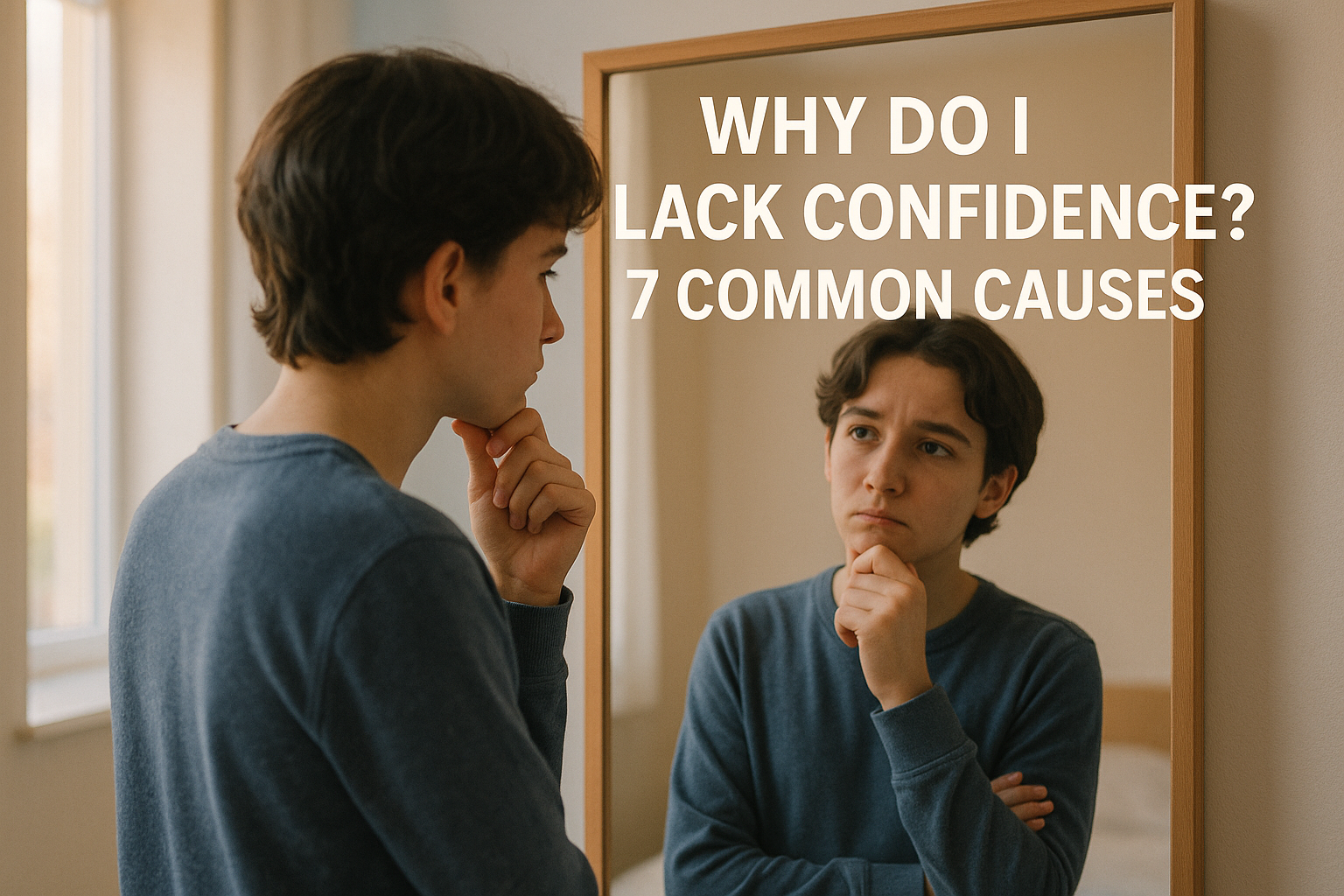
Why Do I Lack Confidence? 7 Common Causes
Struggling with confidence? You’re not alone. Many of us face self-doubt that holds us back in life. But understanding the reasons behind it can help you regain control. Here are seven key factors that often undermine confidence:
- Fear of Failure: Worrying about mistakes can stop you from trying new things.
- Negative Self-Talk: Your inner critic might be feeding self-doubt.
- Lack of Self-Trust: Doubting your decisions can make even small choices overwhelming.
- Comparing Yourself to Others: Social media and societal standards can make you feel inadequate.
- Past Experiences: Early life conditioning might still affect your self-worth.
- Perfectionism: Unrealistic expectations can lead to constant disappointment.
- Lack of Preparation or Skills: Sometimes, confidence issues stem from actual skill gaps.
The takeaway? Confidence grows when you address these root causes directly. Start small, celebrate progress, and focus on learning instead of perfection.
The REAL Reason You Still Don’t Feel Confident - Psychologist Explains
1. Fear of Failure
Fear of failure can eat away at your confidence, constantly whispering, "What if I mess up?" This nagging thought can hold you back from taking action and reaching your potential.
When this fear takes hold, your attention shifts to everything that could go wrong. You start viewing yourself through a harsh, critical lens, doubting your abilities and second-guessing your choices. Over time, this self-doubt can become a significant roadblock, keeping you from moving forward.
One of the most damaging aspects of this fear is how it shapes your behaviour. Instead of embracing challenges, you might begin avoiding them altogether. Maybe you shy away from social situations, hesitate to try new activities, or steer clear of tasks that feel daunting. For example, you might pass up opportunities at work or avoid stepping outside your comfort zone in social settings. While avoiding these situations might feel safe in the moment, it only reinforces your doubts and creates a cycle of avoidance.
This fear often has deep roots, stretching back to childhood. Harsh criticism or high expectations during those formative years can leave you feeling "not good enough." Perhaps you were made to feel that mistakes were unacceptable, or you struggled to meet the lofty standards set by others - or even by yourself.
Stressful life events, like a serious illness or losing a loved one, can further chip away at your confidence, making the fear of failure even more intense. Personality traits such as perfectionism or a tendency to dwell on negative thoughts can also make you more prone to this fear.
On the other hand, people with healthy self-esteem don’t let fear stop them from trying. They understand that failing is just part of the process - it doesn’t define their worth or abilities. They see mistakes as opportunities to learn and grow, not as proof of inadequacy.
If fear of failure is holding you back, start small. Set yourself manageable goals, like joining a class or attending a social event. These small steps can help you rebuild confidence and break the cycle of avoidance. Recognising this fear is the first step. Up next, we’ll look at how negative self-talk can further undermine your confidence.
2. Negative Self-Talk
Your inner critic can chip away at your confidence, feeding you lines like, "I'm too stupid" or "Nobody finds me interesting."
This harsh internal dialogue often has its roots in childhood - maybe you faced constant criticism or tried to live up to impossible expectations. Over time, those external voices morph into your own inner critic, replaying doubts and insecurities. Stressful situations can make these thoughts louder, and if you lean towards perfectionism or tend to focus on the negatives, you might find yourself stuck in this cycle more often.
The trouble with negative self-talk is that it can trap you in a loop. If you keep telling yourself you’re not good enough, you might start believing it. This belief can hold you back - whether it’s hesitating to take on new challenges, avoiding speaking up in meetings, or shying away from opportunities that could help you grow.
One way to break this cycle is to challenge those thoughts. Write down the recurring negative ideas you have, like "I always mess things up." Then, counter each one with real evidence of your strengths. For example, if you think, "I’m hopeless at everything", remind yourself of specific achievements: "I’m great at solving cryptic crosswords", "I organised an amazing surprise party for my friend", or "My colleagues often come to me for advice on projects."
Another useful exercise is to create a list of your positive traits. Write down at least five qualities you admire about yourself, along with compliments you’ve received from others. Your list might include things like, "I’m a thoughtful friend", "I make the best Sunday roasts", or "My sister calls me every week because she loves chatting with me." Keep this list somewhere you’ll see it often, and update it whenever you can.
It’s also important to show yourself the same kindness you’d offer a close friend. When that critical voice starts nagging, ask yourself, "What would I say to my best mate if they were thinking this?" Chances are, you’d be much more supportive and encouraging to them than you are to yourself.
If it feels like negative self-talk is overwhelming, consider reaching out for help. Talking therapies like Cognitive Behavioural Therapy (CBT) can guide you in replacing those destructive patterns with more balanced and constructive ways of thinking. Remember, these thoughts aren’t facts - they’re just old habits that you can reprogramme.
3. Lack of Self-Trust
When you struggle to trust your own judgement, even the simplest decisions can feel overwhelming. You might find yourself constantly second-guessing your choices or avoiding decisions altogether because you're convinced you'll mess them up.
This lack of self-trust often stems from past experiences. Maybe you made a career move that didn’t pan out, picked the wrong university course, or put your faith in someone who let you down. These moments can linger, making you doubt your ability to make good decisions - even in entirely unrelated situations.
Things can get worse when you start leaning too heavily on others for validation. Perhaps you ask your partner what to wear every morning, seek your parents’ approval for every big purchase, or rely on friends to make decisions about your relationships. While seeking advice is perfectly normal, depending on others too much can chip away at your confidence in your own instincts.
Another common trap is analysis paralysis - overthinking decisions to the point where you make none at all. For example, you might spend weeks researching the "perfect" holiday destination, only to book nothing because you're terrified of choosing the wrong place. This cycle of overthinking only reinforces the belief that you can't make reliable choices.
Self-trust also takes a hit when you focus solely on your mistakes while ignoring your wins. You might vividly remember that time you picked a dodgy restaurant that ruined everyone’s evening, but completely forget about all the amazing places you’ve chosen in the past. This selective memory creates a warped view of your decision-making ability.
So, how can you rebuild trust in yourself? Start by acknowledging your past successes. Take a moment to jot down five decisions from the past year that turned out well. Maybe you nailed a thoughtful birthday gift for your sister or signed up for an evening class that you’ve loved. These examples remind you that your judgement isn’t as flawed as you might think.
Next, practise with low-stakes decisions. Choose your lunch without asking for opinions, or pick a film without combing through endless reviews. Each small choice you make and stick to strengthens your belief in your own abilities.
For bigger decisions, set a clear deadline. Give yourself a set amount of time to gather information - say, a week to choose a new phone or a month to plan a holiday. Once the deadline hits, make the decision and commit to it. Remember, there’s rarely a single "perfect" choice - every path comes with its own set of outcomes.
If you’re looking for extra support, The Catalyst Method’s 30-day confidence-building programme offers structured challenges and a supportive community to help you put these steps into action.
4. Comparing Yourself to Others
Social media has made comparison a daily ritual for many of us. You might scroll through Instagram and spot your friend's promotion, your cousin's perfectly organised kitchen, or that old uni acquaintance seemingly living their dream life in Bali. Suddenly, your own life feels... ordinary.
But here's the catch: you're comparing your everyday challenges to someone else's highlight reel. That colleague who always seems polished might be quietly dealing with their own struggles. And that friend flaunting their enviable relationship? They could be wrestling with private doubts.
Society doesn't make this any easier. We're constantly bombarded with unattainable standards - flawless bodies in fitness ads, pristine homes in lifestyle magazines, and celebrities who seem to achieve everything effortlessly. These images create benchmarks that are impossible to meet, leaving many of us feeling like we're falling short.
This cycle of comparison is a double-edged sword - it not only feeds low confidence but also stems from it. When you keep telling yourself you don’t measure up, you start to believe it. Your mind begins to focus on evidence that confirms this belief, while ignoring your own achievements and worth. The worst part? This habit can feel productive, as if you're motivating yourself to improve, but it often does the opposite - chipping away at your confidence instead of inspiring growth.
Pay attention to how scrolling through social media makes you feel. If it leaves you deflated, it’s likely triggering unhealthy comparisons. Thoughts like "Everyone else has it all figured out" or "I’m so behind" are red flags.
To escape this trap, start by curating your digital environment. You don’t need to quit social media altogether, but be mindful of what you consume. Unfollow accounts that leave you feeling inadequate and follow ones that genuinely uplift and inspire you.
In real life, surround yourself with people who encourage you and celebrate your successes. If certain friends tend to one-up your experiences or undermine your decisions, it might be time to focus more on relationships where mutual support is the norm.
When you catch yourself comparing, shift the narrative. Instead of dwelling on what others have, ask yourself, "What steps can I take to reach my own goals?" This small change can redirect your energy from self-doubt to proactive action. It’s a powerful way to refocus and move forward.
sbb-itb-6d98f47
5. Past Experiences and Conditioning
The confidence we carry as adults often has roots in our early interactions with primary caregivers. When affection or approval is tied to meeting certain expectations, it can teach us to link our self-worth to achievements. For instance, if praise was only given for top grades or flawless behaviour, you might grow up believing that love and acceptance are earned through perfection.
This conditional approval can erode your sense of self-worth. As an adult, even small setbacks might stir up self-doubt because that early message - your value depends on your performance - still lingers in your mind, shaping how you see yourself.
But here’s the truth: those early experiences don’t define you. Recognising this gives you the power to question those old beliefs and replace them with a kinder, more realistic view of yourself. This shift is a vital step towards restoring your confidence.
6. Perfectionism
Perfectionism might seem like a positive trait, but it often works against your confidence. Setting unrealistically high standards for yourself can lead to feeling defeated before you even begin.
The issue isn’t wanting to excel - it’s believing that anything short of perfection is a failure. This way of thinking creates a harmful loop: every time you don’t meet these impossible expectations, your self-esteem takes a hit.
Perfectionism can be paralysing. It often stops you from pursuing projects or passions because you feel everything must be perfectly planned out beforehand. As Barbara Markway, Ph.D., Clinical Psychologist, puts it:
"Perfectionism contributes to low self-confidence by keeping one from doing things they value."
The signs of perfectionism’s impact on your confidence can be subtle. For example, you might find yourself putting intense pressure on every task, which is often tied to low self-esteem. Even minor mistakes may cause overwhelming anxiety, making it difficult to move forward.
Perfectionism is also closely linked to imposter syndrome. Studies show it’s one of the top three causes of imposter syndrome among women, with 30% of those affected citing perfectionism as a factor. This combination of self-doubt and unrealistic expectations can seriously undermine your confidence.
The way forward is to accept imperfection as part of being human. Perfection simply isn’t achievable, and holding yourself to that standard is counterproductive. Start by questioning those perfectionist beliefs - they’re often rooted in unrealistic expectations, not facts. By understanding how perfectionism affects you, you can adopt strategies to rebuild your confidence and move past its grip.
7. Lack of Preparation or Skills
Sometimes, low confidence isn't just about perception - it can actually come from gaps in skills or preparation. If you're missing essential skills or haven't put in the necessary groundwork, self-doubt might be a reflection of reality rather than just a mindset issue.
This is different from confidence struggles caused by negative self-perception. Here, the issue is clear and rooted in real deficiencies, not distorted thinking. Recognising this distinction is important because it allows you to focus on closing the gap between your current abilities and what's required.
It’s worth noting that many people underestimate their own abilities, believing they’re less capable than they actually are. However, if there’s a genuine lack of preparation or skills, acknowledging it is the first step toward building authentic confidence.
Once you’ve identified the issue, it’s time to dig deeper. Often, inadequate preparation comes down to poor time management or underestimating the effort needed. This can lead to a vicious cycle: feeling unprepared, performing poorly, and losing even more confidence. On the other hand, skill gaps may take longer to address, but they are entirely fixable. The key is understanding that skills can be developed and competence grows with consistent effort.
The solution isn't to shy away from challenges but to focus on effective preparation. This could involve setting aside more time for research, finding training opportunities, or practising until you feel ready. When you know you’ve put in the work, confidence tends to follow naturally.
Improving your skills takes patience, but even small steps forward can make a big difference. Start with the basics, build gradually, and stay committed to learning. Every skill you master lays the groundwork for tackling future challenges. Remember, even the most confident experts started out without the abilities they now excel at - they simply invested time and effort into preparation before taking the leap.
Confidence Building Methods Compared
Once you've identified the areas where your confidence needs a boost, the next step is choosing an approach that fits your situation. Here’s a closer look at four different methods to help you regain confidence:
Self-help approaches are a popular starting point. Resources like books, podcasts, and online tools offer flexibility and are often budget-friendly. These methods put you in control of your learning pace, but they require a lot of self-discipline. One downside is the lack of personalised feedback or accountability, which can make it harder to stay on track.
One-to-one coaching provides a highly tailored way to build confidence. These personalised sessions focus on your unique challenges, offering direct feedback and customised strategies. This can lead to quicker progress. Jainil Vadhan, a Programmatic Solutions Consultant at Amazon, shared his experience:
"The sessions helped me structure my ideas better and shift from reacting impulsively to responding thoughtfully, improving my workplace interactions. The tools and techniques I've learned have greatly boosted my confidence and clarity."
However, this approach often comes with a higher price tag and requires effort to find a coach who’s the right fit for your needs.
Group workshops strike a balance between self-help and individual coaching. These sessions provide structured learning in a collaborative environment, where peer support can be a powerful motivator. As YoungMinds highlights:
"being part of a group, or finding an interest they enjoy, can give them confidence and purpose, which can improve their self-esteem."
Group workshops are especially helpful for individuals seeking connection and shared experiences. That said, they may not suit everyone, as the pace is set for the group, and individual attention can be limited.
Structured programmes offer a more comprehensive approach. These often include a mix of classroom-style lessons, live calls, group discussions, and practical exercises spread over weeks or months. This method provides a clear roadmap for progress and ensures accountability, making it ideal for those seeking a thorough and systematic way to build confidence. However, these programmes require a longer-term commitment, which might not appeal to everyone.
The best choice depends on your specific needs and preferences. For deeply ingrained confidence issues, one-to-one coaching can be a worthwhile investment. If your focus is on developing particular skills, structured programmes might be the answer. Combining methods can also be effective - for instance, using self-help resources as a foundation, joining a structured programme for steady progress, and turning to individual coaching for targeted support. Tailor your approach to match your goals and reinforce your confidence journey.
Conclusion
Identifying the underlying causes of low confidence is the first move towards making lasting improvements. Whether it stems from fear of failure, negative self-talk, lack of self-trust, constant comparisons, past experiences, perfectionism, or skill gaps, recognising these factors allows you to tackle them head-on.
With self-awareness, you can pinpoint what specifically undermines your confidence and choose strategies that directly address those challenges. This clarity paves the way for meaningful and focused actions.
Confidence doesn’t develop overnight - it’s a gradual process that thrives on consistent effort. The secret lies in taking small, steady steps rather than expecting instant transformations.
Remember, taking action is far more important than aiming for perfection. Each small step you take contributes to long-term progress. By understanding and addressing the barriers holding you back, you can make real, lasting changes.
Everyone’s confidence journey is personal. Whether you turn to self-help tools, coaching, group support, or structured programmes, the choice is yours. By committing to these changes, you’re moving closer to becoming more confident and decisive. Use these insights to start making those changes today.
FAQs
How can I overcome my fear of failure and take the first step forward?
Overcoming a fear of failure begins with rethinking how you perceive mistakes. Instead of viewing them as setbacks, try to see them as opportunities to learn and grow. Shifting your mindset in this way can ease the pressure to always get things right and open the door to personal development.
Address negative self-talk by identifying unhelpful thoughts and consciously replacing them with encouraging ones. For instance, if you catch yourself thinking, “I’ll never figure this out,” reframe it as, “I’m in the process of learning, and mistakes are part of that journey.” This simple change can make a big difference in your confidence.
Start by setting small, manageable goals to gradually build self-assurance. Celebrate even the tiniest victories, using them as stepping stones to keep moving forward. Progress doesn’t happen overnight - it’s about taking consistent, meaningful steps toward your goals.
How can I overcome negative self-talk?
Overcoming negative self-talk begins with awareness. Start by tuning into your inner dialogue and recognising when those critical or unkind thoughts creep in. Rather than beating yourself up for having them, simply acknowledge their presence and consider whether they’re rooted in facts or just assumptions.
Once you’ve identified a negative thought, challenge it. Ask yourself something like, “Is this actually true, or am I being too harsh on myself?” Then, take it a step further by replacing that negativity with more balanced and constructive thinking. Imagine how you’d respond to a friend in the same situation, and try speaking to yourself with that same level of kindness and understanding.
Mindfulness can also be a powerful tool here. Techniques like deep breathing or grounding yourself in the present moment can help weaken the grip of negative thoughts. On top of that, incorporating positive affirmations or taking time to appreciate your strengths can gradually shift your mindset. By focusing on gratitude and what’s going well, you can create a more uplifting and encouraging inner dialogue.
How can I trust myself more and make confident decisions without over-relying on others?
Building trust in yourself and making confident decisions begins with addressing negative self-talk. When you catch yourself thinking unhelpful thoughts, try to replace them with more constructive ones. Reflecting on past successes - no matter how small - can remind you of your capabilities and lay the groundwork for trusting your judgement.
Another key step is practising self-compassion. When things don’t go as planned, treat yourself with the same kindness you’d offer a close friend. Mistakes are a part of life and, more importantly, a part of learning. They can even enhance your ability to make better decisions in the future. To keep moving forward, set realistic goals and break them into smaller, manageable steps. Every small win builds your confidence and reduces the urge to seek validation from others.
As these habits become second nature, you’ll find yourself feeling more secure in your decisions and less reliant on external reassurance.